
High Court rejects Uber Kenya bid to exit case filed by 37 boda riders over account deactivations

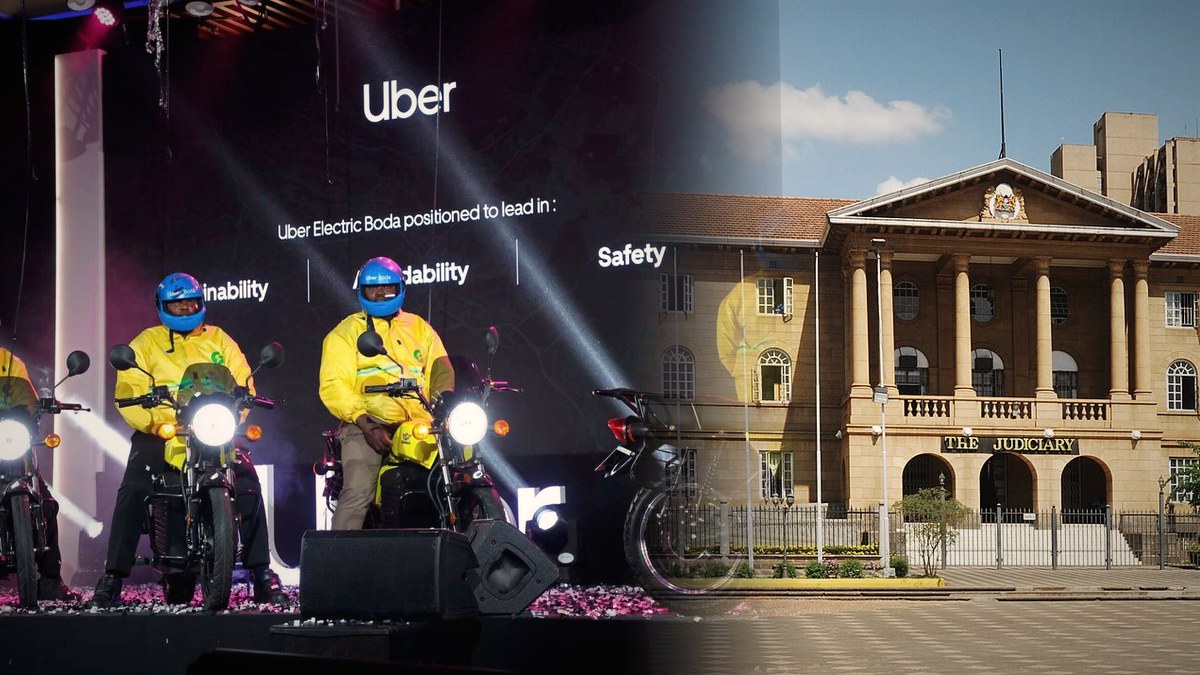
Thirty-seven motorcycle riders who lost access to the Uber app have won the first round of their legal fight after the High Court in Nairobi declined to remove Uber Kenya from a petition challenging the suspension of their accounts.
Justice David Mburu dismissed an application in which the local Uber unit argued that it had no hand in managing rider accounts and should be struck out of the case. The judge ordered that Uber Kenya remain a party and directed that the petition proceed to a full hearing, the Business Daily reported on Monday.
What the riders say
The riders, who worked on the Uber Boda service, say their accounts were suspended without notice, without reasons and without access to the evidence used to make the decisions. Some say the suspensions came after they attended a meeting.
Being locked out of the app, they argue, cut off their income and left them unable to service loans for the electric motorcycles they had acquired through Greenwheels Electric Mobility Solutions Limited. According to court papers cited by the paper, Greenwheels went on to repossess motorcycles after the suspensions, and the riders now face the risk of the bikes being auctioned.
The petition, filed in March 2026, invokes constitutional guarantees on fair administrative action, access to information and consumer protection. The riders say a formal demand for information sent on December 22, 2025 went unanswered.
Uber Kenya's defence
In its application, Uber Kenya argued that the app is owned and operated by Uber B.V., a company registered in the Netherlands, and that its own role in Kenya is limited to promotion, registering users and general support. It denied managing accounts, investigating rider conduct or deciding on suspensions, and said it does not hold the information the riders are seeking.
The company also pointed to a 2013 intercompany services agreement which it says rules out any agency, partnership or joint venture with the Dutch parent, and argued that common ownership by Uber International Holdings B.V. and Uber International B.V. was no reason to lift the corporate veil. Any financial losses, it said, flowed from the riders' separate contracts with Greenwheels.
The riders countered that Uber Kenya runs the platform's local operations and cannot benefit from the business in Kenya while disowning responsibility for the people who use it.
The ruling
Justice Mburu found that Uber Kenya had not shown that its participation in the case was wholly unnecessary. While corporate links alone do not make one company liable for another's actions, he noted, a contractual clause disclaiming agency does not automatically settle whether a company's actual conduct created legal obligations of its own.
Whether Uber Kenya acted as an agent, took part in account decisions or bears responsibility for the alleged rights violations remain contested questions that, in the judge's words, "must be determined on the evidence and the applicable law."
The decision follows a similar position taken by the High Court in a 2021 case brought by Kanuri Limited and 33 others, in which the court also declined to remove Uber Kenya from the proceedings after finding that its communications on behalf of Uber B.V. were relevant to the question of agency.
Why it matters
Account deactivations have become one of the most contentious issues in Kenya's fast-growing gig economy, where tens of thousands of riders and drivers depend on apps for their daily earnings. Riders linked to the Greenwheels and Uber Boda partnership have previously protested in Nairobi over pay deductions.
Elsewhere, European regulators have fined Uber over automated deactivations carried out without adequate notice, and EU data protection rules restrict decisions made solely by algorithms where they significantly affect people.
The outcome of the Kenyan case could shape how far local subsidiaries of global platforms can be held to account for decisions taken by their parent companies abroad. The matter will be mentioned on December 1, 2026.
Photos: Business Daily; Wing/Wikimedia Commons (CC BY-SA 3.0)


Take your event live to thousands.
Multi-camera live streams, panel discussions and digital broadcasts with professional crews.




More in Business
See all
KenGen names commercial boss Ronoh Kibet as next CEO to succeed retiring Peter Njenga

IMF: Kenya passed up to 62% of global fuel price surge to motorists as subsidy cushion wears thin
How Dangote's KPC deal nearly collapsed over 46 cents a share
APA Apollo takes control of two Tanzanian insurers in push beyond Kenya

Treasury's Sh5.4 trillion plan for 2027/28: Recurrent spending crosses Sh4 trillion as development budget shrinks

DStv cuts top package by Sh4,400 and trims lineup to four bouquets as subscribers drift to streaming
Global Community Remarks
0