
UN says drones killed 306 Sudanese in three weeks as UK-led coalition warns of looming famine

Drone strikes by both sides in Sudan's war killed at least 306 civilians in the first three weeks of October, the United Nations human rights office has said. The figure was released as a coalition of 32 governments and organisations warned that famine could spread across the country within months.
The UN Office of the High Commissioner for Human Rights (OHCHR) said in Geneva that hundreds more people were injured between 1 and 21 October. The strikes hit homes, markets, hospitals, displacement camps, power stations and water sources in Darfur, Kordofan, Blue Nile, Khartoum and other states. The office attributed the attacks to both the Sudanese Armed Forces (SAF) and the paramilitary Rapid Support Forces (RSF).
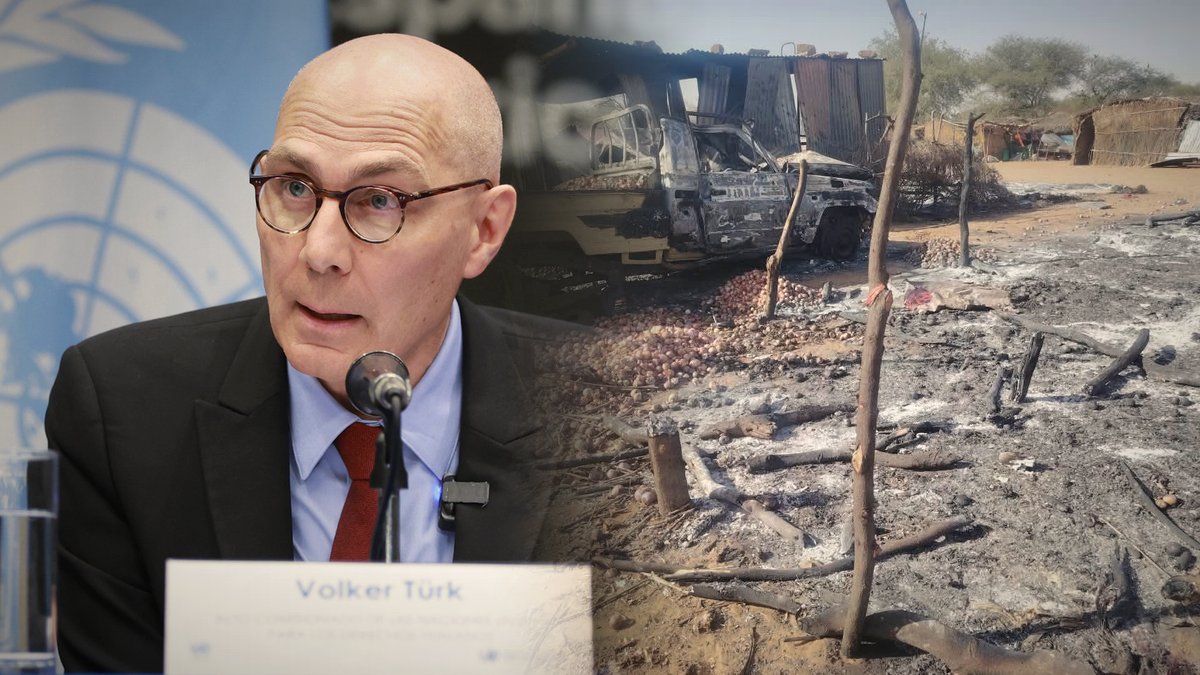
“The increasing use of drones, already accounting for the majority of conflict-related civilian deaths in Sudan this year, is deeply disturbing and is exacting a horrifying toll,” UN High Commissioner for Human Rights Volker Türk said.
Deadliest incidents
The deadliest attack the UN recorded was on 18 October in Dibab, West Kordofan, an area held by the RSF. At least 139 people were killed when a transport truck was struck in what the office called a repeat attack.
Earlier in the month, alleged SAF strikes on displacement shelters in Ghubeish and El Nuhud, also in West Kordofan, killed at least 25 civilians and injured 31 between 6 and 10 October, according to the UN figures reported by Radio Tamazuj. On 9 October, an alleged RSF strike near an artisanal gold site at Abu Shendi in Blue Nile killed at least 31 displaced people, most of them women and children. Two alleged RSF strikes on a gold mining area at Bajaun in South Kordofan, on 9 and 16 October, killed 42 civilians.
Strikes on markets in North Darfur, South Darfur and West Kordofan killed another 23 people. The UN said a hospital in Um Darfa, Blue Nile, closed after an alleged RSF drone attack injured two health workers. It also said RSF drone attacks near Khartoum airport appeared to be retaliation for alleged army strikes on Nyala in South Darfur.
Türk called on states to stop transferring weapons used to violate international humanitarian law. He urged both sides to agree to a ceasefire.
Security Council demands Abyei probe
The violence has also reached the disputed Abyei area on the border between Sudan and South Sudan. In a press statement on 23 October, the UN Security Council condemned drone attacks near Amiet market and Todach on 19 October “in the strongest terms”. It called for a full, transparent and prompt investigation and warned that such attacks could amount to war crimes.
Local authorities say at least 150 people were killed in Abyei, while the UN has so far confirmed at least 80 deaths. South Sudan's government blamed the Sudanese army, which has denied responsibility. The Council repeated that Abyei must stay free of all armed forces except the UN peacekeeping mission, UNISFA.
Famine risk rising
Separately, a joint ministerial statement led by the United Kingdom and backed by 31 other countries and organisations said about 19.5 million Sudanese face high levels of acute food insecurity. About five million of them are at emergency levels, according to the statement reported by Dabanga.
The signatories warned that the number of children with severe acute malnutrition could exceed the projected 825,000 unless the situation improves. They said the number of areas hit by food insecurity, first put at 14, is expected to double. They named the conflict and the systematic obstruction of aid as the main causes, made worse by an El Niño that has reduced rainfall across more than half the country. The “risk of famine in the coming months requires immediate action,” the statement said.
Sudanese groups have demanded more. The General Coordination for Displaced Persons and Refugees called for a humanitarian truce of at least 90 days, Dabanga reported.
The Kenyan angle
For Kenya, the escalation complicates a diplomatic push that Nairobi has joined. Kenya sat alongside the United States, China and Russia at recent Geneva talks where envoys pressed the warring parties for a ceasefire. The war, which began in April 2023, has already caused one of the world's largest displacement crises and sent refugees into neighbouring states, including South Sudan.
Photos: Radio Tamazuj; Dabanga



Know what people say about you.
Media monitoring, audience insights and strategic communication for your brand.


More in International
See all
Machado returns to Venezuela after 10 months in exile, offers talks with interim President Delcy Rodríguez

Lula wins record fourth term in Brazil as markets crash and Flávio Bolsonaro seeks annulment
Saudi, Pakistani and Turkish envoys rush to Tehran to stop Iran war from reigniting

Israel votes as Eisenkot challenges Netanyahu in first election since October 7
UN to shut down its political mission in Somalia on October 31, ending more than three decades of missions
UK sanctions 15 Sudanese army and RSF commanders on El Fasher anniversary, pledges £15 million in aid
Global Community Remarks
0