
THE NEW POLITICAL WAVE IN SOMU
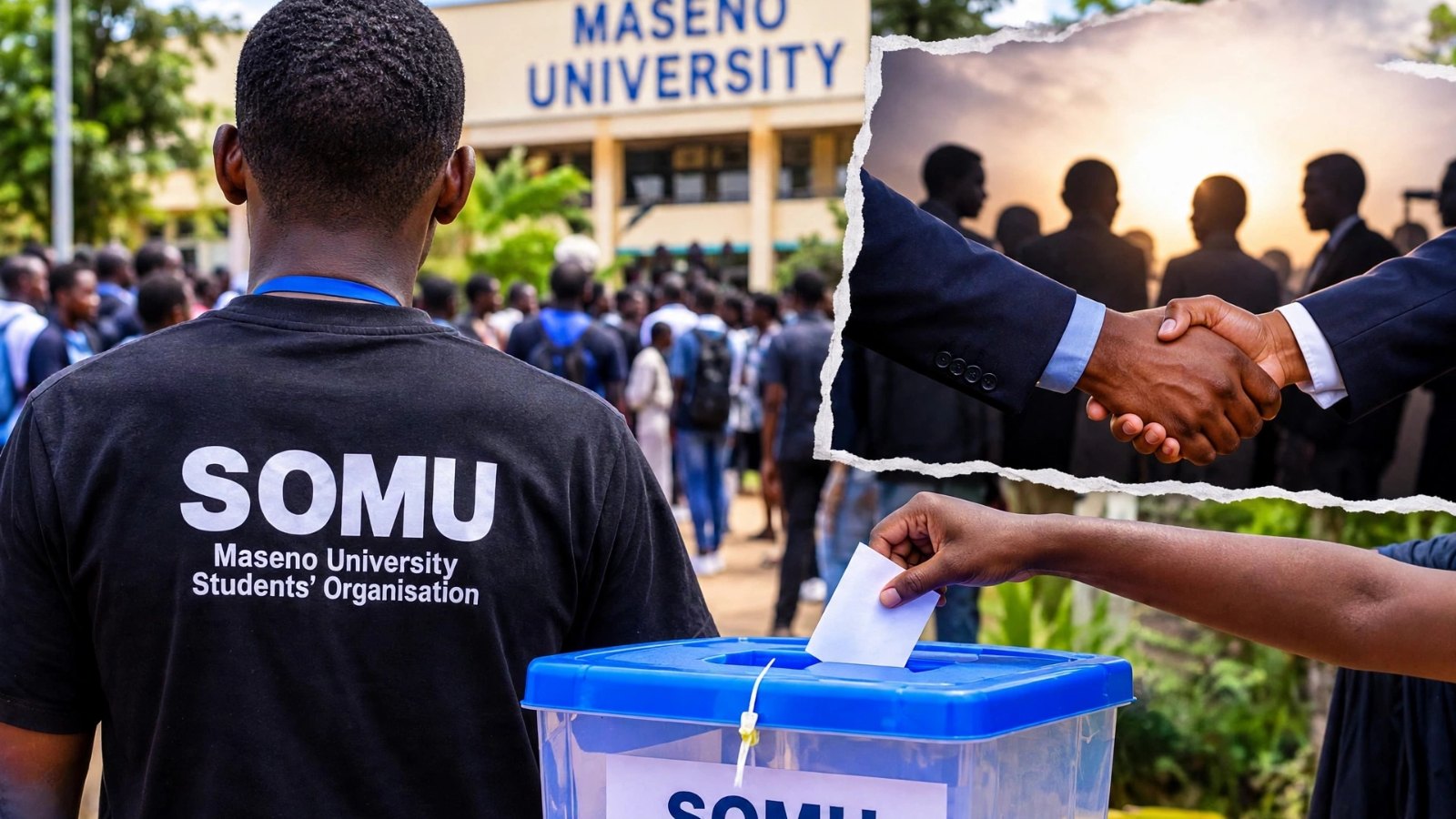
The just-concluded Maseno University Students' Organisation (SOMU) elections may have revealed a new political reality within the university's student leadership: the growing influence of political coalitions, house endorsements and strategic alliances.
Beyond the usual individual campaigns, there are growing claims that some aspirants entered into behind-the-scenes political arrangements, aligning themselves with candidates contesting for different positions in what appears to have been a calculated electoral strategy.
While such arrangements remain largely alleged, the outcome of the elections has sparked conversations about the emergence of a possible coalition-based political system within SOMU.
The Power of Houses and Block Voting
One of the interesting dynamics witnessed during the election period was the apparent influence of houses and organised voting blocs.
Rather than candidates relying entirely on their individual popularity, networks, house endorsements and collective political interests may have played a significant role in determining electoral outcomes.
This raises an important question: Are SOMU elections gradually shifting from individual popularity contests to organised political coalition systems?
In such an environment, an aspirant's chances of winning may no longer depend solely on their manifesto, popularity, leadership credentials or personal connections, but also on the political camp they belong to and the alliances they manage to build.
When Alliances Become Electoral Threats
Political alliances are not necessarily a bad thing. In democratic politics, strategic partnerships are often formed to consolidate support, strengthen campaigns and improve the chances of victory.
However, the SOMU political conversation takes an interesting turn when such alliances potentially disadvantage otherwise competitive candidates.
There are claims that some aspirants who appeared to have strong winning prospects eventually lost ground because of political alignments and coalition arrangements involving candidates in other dockets.
If these claims hold, it would suggest that the election was not merely about individual candidates competing for positions, but also about political camps negotiating influence and consolidating votes across different dockets.
A New Era of Student Politics?
The emerging political dynamics could signal the beginning of a new chapter in SOMU politics, where coalition-building, strategic endorsements and house-based voting become increasingly influential.
For future aspirants, the lesson may be clear: building a strong campaign will require more than personal popularity. Understanding the political landscape, engaging different houses, building trust and establishing strategic partnerships could become equally important.
Nevertheless, the integrity of student democracy must remain central. Political alliances should strengthen representation and democratic participation rather than undermine the voices and independent choices of delegates.
The Bigger Question
As the dust settles from the just-concluded SOMU elections, one question remains:
Is SOMU slowly developing its own version of a secret coalition political system, where the real battle for leadership is sometimes decided long before delegates cast their votes?
Only time will tell whether this was an isolated electoral experience or the beginning of a lasting political culture at Maseno University.
One thing is certain: SOMU politics is evolving, and the next electoral cycle could be even more interesting.
Take your event live to thousands.
Multi-camera live streams, panel discussions and digital broadcasts with professional crews.




More in House politics
See all
NACSAMU held their Hike : Fun, Welfare, and Leadership Engagement

Sirikwa House Elections Mark a New Chapter for Kalenjin Students at Maseno University

BARASA TAKES OVER DUTIES AND RESPONSIBILITIES OF MUSWEPA CHAIRMANSHIP
.jpeg)
Back to Elections?

Kenyan University Lecturers End Nationwide Strike After Sh20 Billion Deal With Government

Global Community Remarks
0