
Muslims projected to outnumber Christians worldwide by 2035, Pew study finds
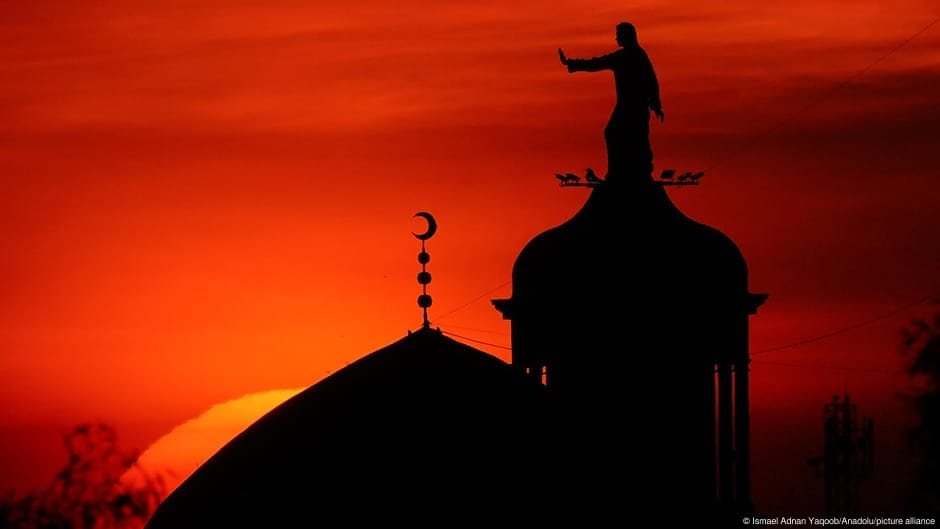
Muslims are expected to become the world's largest religious group by 2035, overtaking Christians, according to projections from the Pew Research Center reported by DW News.
The Washington-based research organisation estimates that there will be about 2.57 billion Muslims and 2.52 billion Christians in 2035. Both faiths are growing, but Pew says Islam is expanding at a faster pace.
Birth rates drive the shift
The study points to fertility as the main factor. Muslim families, on average, have more children than those of other major religious groups.
Pew senior demographer Conrad Hackett summed up the finding plainly, telling the AP news agency: "It's the babies."
According to Pew data, Muslim women had an average of 3.1 children between 2020 and 2025. Christian women averaged 2.5 children over the same period.
Women outside these two groups averaged 1.6 children. That figure falls below 2.1, the rate generally needed for one generation to replace itself.
From 2020 to 2070
Pew's estimates put the global Christian population at 2.27 billion in 2020, ahead of 2.02 billion Muslims.
The gap is projected to close and reverse within about 15 years. Looking further ahead, the centre says that if current trends hold, the number of Muslims worldwide could pass 3.6 billion by 2070. Christians would then number slightly under 3 billion.
Growth mostly within existing majorities
Alan Cooperman, who heads religion research at Pew, told AP that most of the expected growth among both Muslims and Christians is taking place in countries where each faith already forms the majority.
He said conversion between religions plays only a small part in the changing figures.
Cooperman stressed that the rise of one faith is not happening at the expense of the other. He also voiced concern that the findings could be misrepresented in headlines or narratives presenting them as a contest in which Christians are losing ground to Muslims.
Call for interfaith understanding
Gina Zurlo, a senior researcher at Harvard Divinity School who specialises in religious demographics, said the trends make relations between faith communities extremely important.
She expressed hope that people would pursue more opportunities for inter-religious education. Zurlo added that personal relationships across religious lines help people see those of other faiths in a more human light.
What the projections mean
The figures are projections based on recent patterns rather than certainties. Pew's longer-range estimates to 2070 depend on present trends in fertility and other factors continuing.
Still, the findings underline how population dynamics, rather than mass changes in belief, are reshaping the global religious landscape. Regions with younger populations and higher birth rates are set to account for a growing share of the world's believers in the decades ahead.
This story was prepared by the Hamasta Newsdesk with AI assistance, based on reporting by DW News. Read the original report. Photo: DW News.


Take your event live to thousands.
Multi-camera live streams, panel discussions and digital broadcasts with professional crews.




More in International
See all
Ukraine brings down section of Russia's Crimea bridge in back-to-back strikes
Houthis near Aden may choose siege over assault to force talks, analysts say
Gazans flee as Israeli troops push beyond Yellow Line in central Gaza

Russian strikes on Ukraine kill at least five, most of them in Odesa

US Navy chief says Hormuz insurance now $64m per crossing as shipping stays depressed

Global Community Remarks
0