
Iraq strikes deal with Kataib Hezbollah over Jurf al-Sakhar stronghold
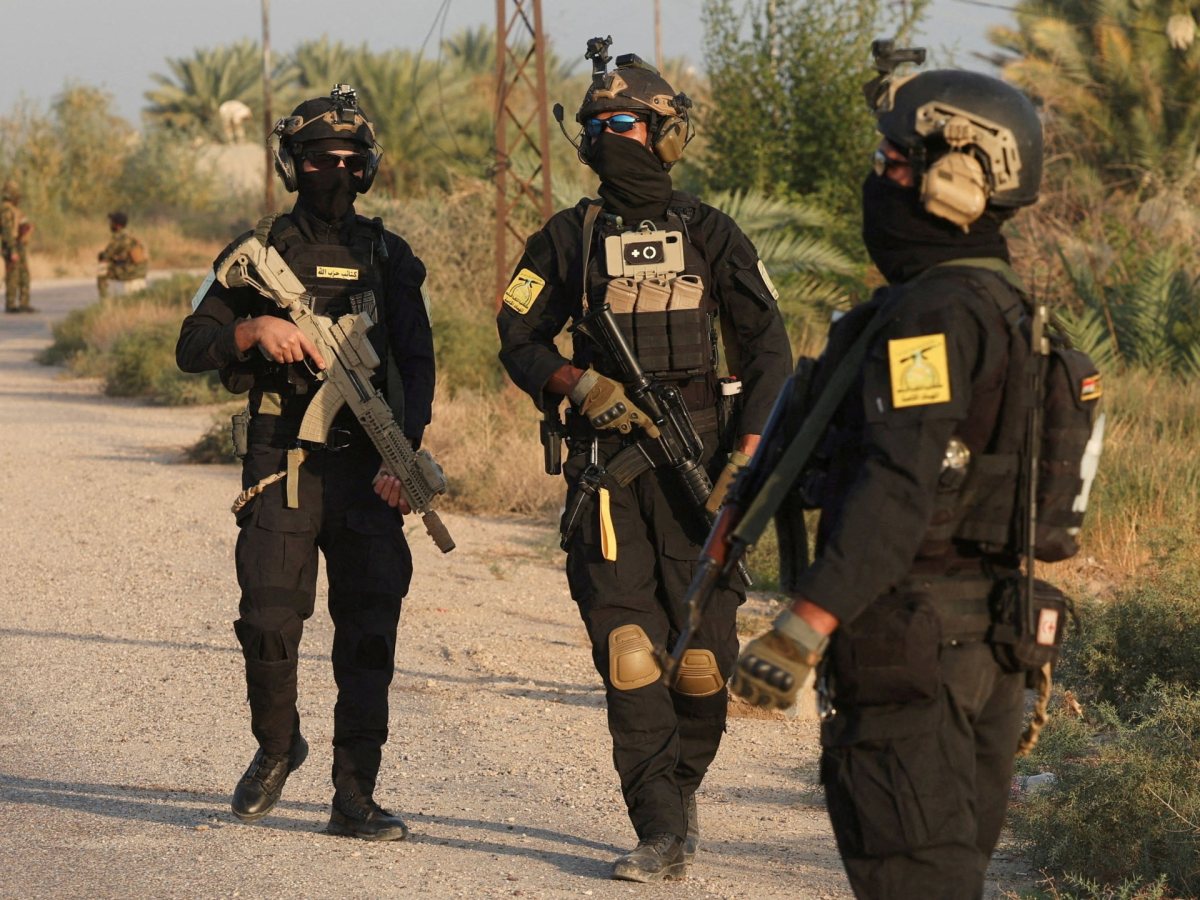
Iraq's government has reached a compromise with the Iranian-backed armed group Kataib Hezbollah over control of Jurf al-Sakhar, a strategic town south of the capital, Baghdad, according to Al Jazeera.
Under the arrangement, which Iraq's prime minister announced, security forces will set up a joint operations centre in the town. The deal was reached late on Thursday and appears to have eased a standoff that had raised fears of armed confrontation.
In a statement, Iraq's commander-in-chief of the armed forces said the new centre would begin operating at 6am local time (03:00 GMT) on Friday.
Who will be deployed
The agreement provides for a new combined force to be stationed in the area. According to Al Jazeera, it will be made up of:
- a brigade from the Iraqi Army;
- a brigade from the Federal Police;
- a regiment from the Energy Police, tasked with protecting oil pipelines in the area; and
- two brigades from the Popular Mobilisation Forces (PMF) Commission.
The PMF is a grouping of armed factions that are formally part of Iraq's state security apparatus. Its ranks include some Kataib Hezbollah fighters, meaning the group will retain a presence in the area through the combined force.
Oil smuggling allegations
Jurf al-Sakhar has for a long time been regarded as a Kataib Hezbollah stronghold. The compromise follows an announcement by the Iraqi government that it intended to send security forces into the area, amid allegations that the armed group was involved in smuggling oil.
The presence of an Energy Police regiment dedicated to guarding pipelines in the new force reflects the government's concern over the region's oil infrastructure.
A tense build-up
The deal comes after days of rising tension. A senior Iraqi official had earlier told Al Jazeera that Kataib Hezbollah had been given until Friday to withdraw from Jurf al-Sakhar.
The group had threatened to confront government troops and had rejected efforts by Baghdad to disarm militias operating outside state control.
Iran also appears to have played a role in efforts to calm the situation. Earlier in the week, an Iraqi official told Al Jazeera that Esmail Qaani, commander of the Quds Force of Iran's Islamic Revolutionary Guard Corps (IRGC), had travelled to Iraq to push for a solution amid the simmering tensions.
What it means
The compromise allows the Iraqi state to establish an official security presence in an area long dominated by an armed group, while stopping short of the full withdrawal that officials had earlier demanded.
By including PMF brigades that contain Kataib Hezbollah members, the arrangement avoids a direct clash between government forces and the group. However, it leaves open the wider question of Baghdad's push to bring non-state armed factions under its authority, which Kataib Hezbollah has so far resisted.
How the joint operations centre functions in practice, and whether it addresses the allegations of oil smuggling, is likely to be closely watched in the coming days.
This story was prepared by the Hamasta Newsdesk with AI assistance, based on reporting by Al Jazeera. Read the original report. Photo: Al Jazeera.

Tell your story on screen.
Commercials, documentaries, interviews and social video, from script to final cut.





More in International
See all
Taiz water crisis deepens as Houthi siege cuts supply and fuel to Yemeni city
US Lists Six Categories of Foreigners Permanently Barred From Citizenship

Denmark Publishes Job List Foreign Graduates Can Use to Apply for Work Permits
Thousands displaced again in Gaza's Nuseirat after Israeli ground operation
Deaf Nigerians push to save indigenous sign languages from disappearing
Global Community Remarks
0