
Taiz water crisis deepens as Houthi siege cuts supply and fuel to Yemeni city
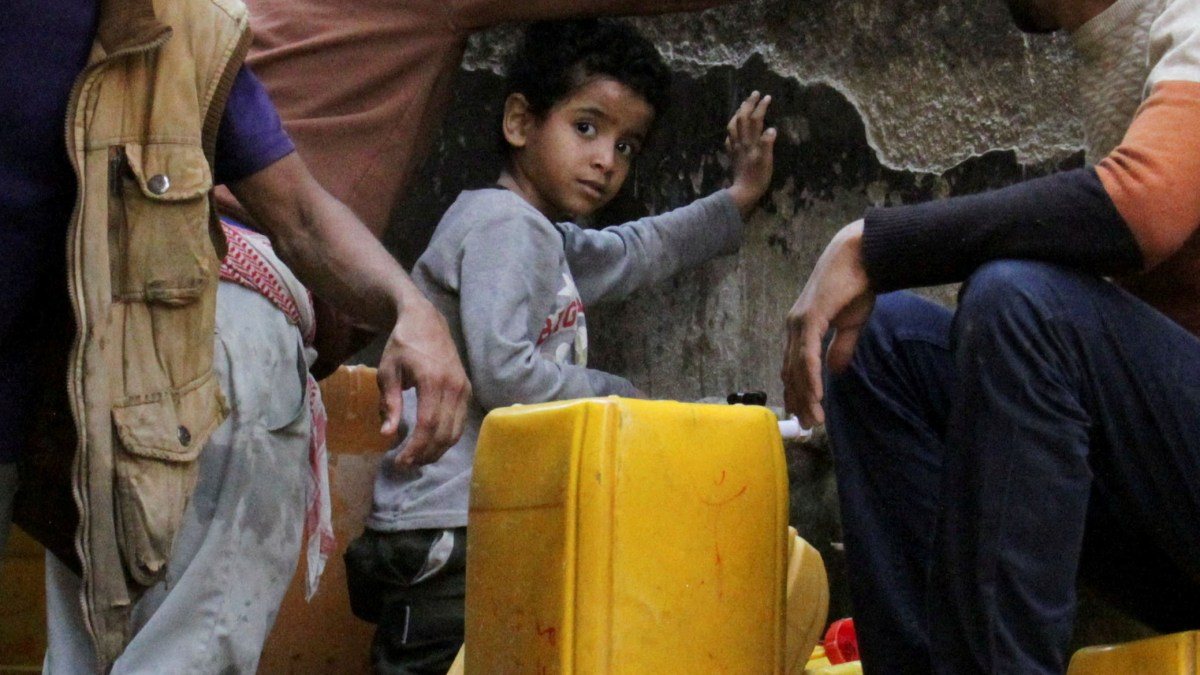
Residents of Taiz, Yemen's third-largest city, are increasingly being forced to rely on contaminated water after a renewed Houthi siege cut access to a key wellfield and starved local pumps of diesel, according to Al Jazeera.
The United Nations children's agency, UNICEF, says water production in the southwestern city has fallen by almost half. More than 800,000 people are reported to be cut off from humanitarian assistance.
Qaid al-Sharaabi, a resident, waited three days for a tanker of clean water and says he has had to pay double the usual price twice since the siege began about six weeks ago. He told Al Jazeera he feared more people would turn to unsafe water if conditions did not improve.
A long-running shortage made worse
Taiz has struggled with water scarcity for years. Wafiq al-Aghbari, director-general of the governorate's Local Water and Sanitation Corporation, said the problem escalated in 2015 when the Houthis first besieged the city, and has grown steadily worse since.
Before the war began in 2014, the city drew about 20,000 cubic metres of water a day from six large wellfields. Only one of these lies within city limits, and it was previously reserved for emergencies. By 2015, the five external wellfields had either been taken by the Houthis or ended up on the front lines.
Efforts in recent years to drill new wells and repair old ones raised daily output to 5,000 cubic metres, which al-Aghbari said covered just 14 percent of estimated need.
That fragile progress was reversed in October, when the Iranian-backed Houthis encircled Taiz again after gains against government forces in the surrounding countryside. They took control of the Hadhran al-Dhabab wellfield, which had been partially restored in August 2025.
The corporation has since lost 3,200 cubic metres of daily capacity: 1,200 from Hadhran al-Dhabab and a further 2,000 because diesel shortages have halted wells inside the city. It can now produce only 1,800 cubic metres a day.
Charity points and finances under strain
Fuel and water shortages have also disrupted the city's subsidised charitable distribution points, known as "sabeel", which previously supplied up to 1.5 million litres of fresh water and 1 million litres of untreated water daily.
Al-Aghbari said the corporation was in a serious financial crisis after losing most of its international and local funding, at a time when worsening economic conditions mean more residents cannot afford commercial water and depend on free supplies.
A commercial tanker owner, who asked not to be named for security reasons, said prices jumped at the start of the siege from 18,000 riyals (about $12 at parallel market rates) to 30,000 riyals (about $20). He said Houthi inspections at checkpoints can last hours, and that drivers are sometimes kept outside the city for more than a day.
The Houthis have denied responsibility for closing roads into Taiz. Human Rights Watch has said residents, aid workers and UN officials blame the group for the city's shortages.
Doctors warn of disease
Dr Abdulqawi al-Shamiri, director of the city's al-Taawun Hospital, warned of serious health consequences. He said water from the emergency wells inside Taiz had long been unfit for human use, being either contaminated or heavily salted.
He attributed the contamination to sewage seeping into water through poorly maintained networks, and to rubbish dumped in streets and flood channels. He said the Houthis have blocked waste from being taken to a landfill outside the city. An internal report from the governorate's Cleaning and Improvement Fund indicates nearly half of the city's rubbish goes uncollected.
Al-Shamiri said residents are contracting cholera and acute diarrhoea as a result.
"Most people are being forced to use it under the current circumstances," al-Shamiri told Al Jazeera.
Government officials say they are uncertain how long they can continue to fund even limited services as fighting around the city continues.
This story was prepared by the Hamasta Newsdesk with AI assistance, based on reporting by Al Jazeera. Read the original report. Photo: Al Jazeera.



Know what people say about you.
Media monitoring, audience insights and strategic communication for your brand.


More in International
See all
Iraq strikes deal with Kataib Hezbollah over Jurf al-Sakhar stronghold

US Lists Six Categories of Foreigners Permanently Barred From Citizenship

Denmark Publishes Job List Foreign Graduates Can Use to Apply for Work Permits
Thousands displaced again in Gaza's Nuseirat after Israeli ground operation
Deaf Nigerians push to save indigenous sign languages from disappearing

Global Community Remarks
0