
AI-assisted Riemann hypothesis proof could take years to verify, physicist warns
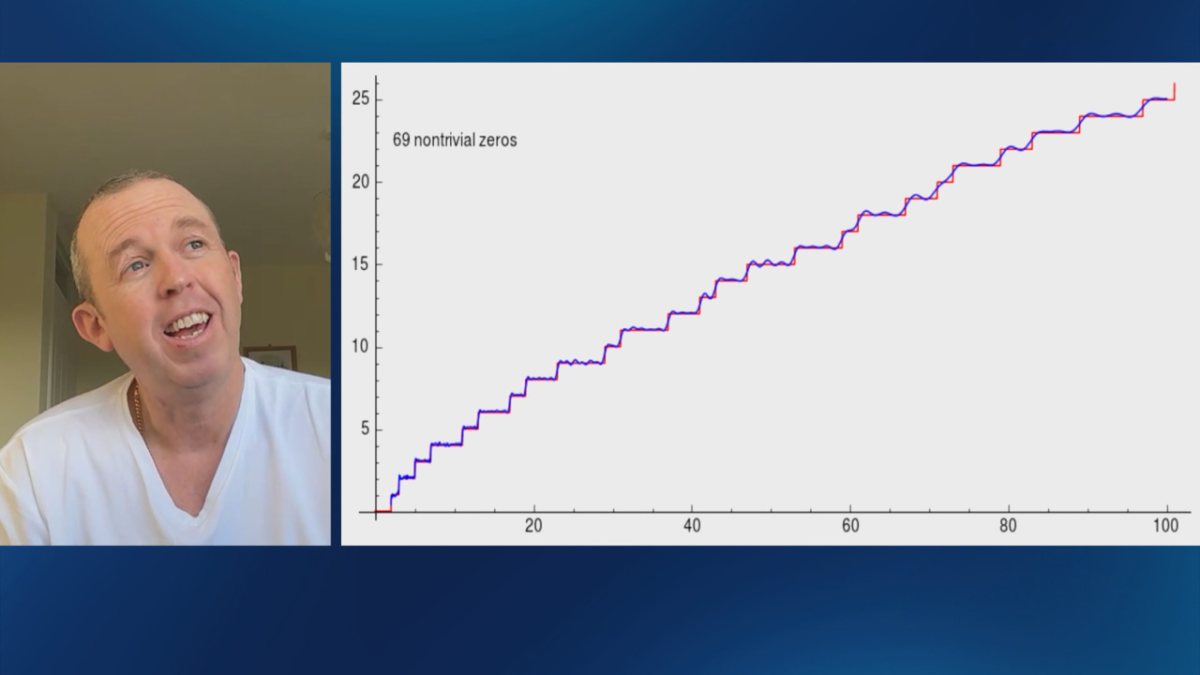
A claimed proof of the Riemann hypothesis, produced with the help of artificial intelligence, may take years to confirm, a leading physicist has warned. The proof was published on Friday by Anthropic mathematician Levent Alpöge.
Alpöge says he solved the problem by working with Claude, the chatbot built by US AI company Anthropic. According to France 24, the proof runs to 17 million lines of code, and no human has read it in full.
A problem that has stood since 1859
The Riemann hypothesis is a conjecture about how prime numbers are distributed. Mathematicians have tried and failed to prove it since it was first put forward in 1859.
It is one of the Millennium Prize Problems, a set of famous unsolved questions named by the Clay Mathematics Institute. Each carries a prize of one million US dollars.
If the new proof holds, it would be another major milestone for AI in mathematics. France 24 described it as the latest high-profile result in the field to be claimed by the technology.
Brian Conrey is a leading expert on the hypothesis. In August, he reviewed an earlier Claude paper on the problem for Anthropic. He has described the moment as the most significant event in the history of mathematics, according to France 24.
Calls for a human-readable proof
Others are more cautious. Tony Padilla is a theoretical physicist at the University of Nottingham. Speaking to France 24's Tech 24 programme, he said a confirmed proof would have a wide impact, because many other proofs in mathematics depend on the hypothesis being true.
Even so, he stressed that mathematicians would need a version of the proof that people can actually read and check before accepting it.
"This can take years… there may be problems and we don't know." — Tony Padilla, University of Nottingham
Padilla said it was still very early days for the claim.
Transparency concerns
Padilla also called for openness about how the result was reached. He noted that Alpöge, as an Anthropic employee, would have commercial interests in the outcome.
For that reason, he said, everything should be shared in a way that the wider mathematical community can follow and examine. In his view, Alpöge should explain the process that led to the proof, and not only publish the final result.
Why it matters
The claim adds to a growing debate about the role of AI in research. A key question is how scientists should treat results that are too large or too complex for any person to check directly.
A proof spread across millions of lines of code poses a new kind of challenge. Mathematical breakthroughs have traditionally been confirmed through peer review, with experts examining each step of the reasoning.
For now, it remains to be seen whether the Riemann hypothesis has finally been settled. Experts such as Padilla say the verification process is only just beginning.
This story was prepared by the Hamasta Newsdesk with AI assistance, based on reporting by France 24. Read the original report. Photo: France 24.



Know what people say about you.
Media monitoring, audience insights and strategic communication for your brand.


More in Technology
See all
Internet metering bill draws fire over privacy, cost fears

Anthropic mathematician claims AI-assisted proof of the Riemann hypothesis
Gates Foundation's Basinga urges Africa to put practical needs ahead of AI hype
Kenyan edtech startup Dira wins US$10,000 at African Agentic AI Design Challenge

Eight Kenyan university students head to China for Huawei technology training
Global Community Remarks
0