
Guinea orders Conakry clean-up after deadly rubbish dump collapse
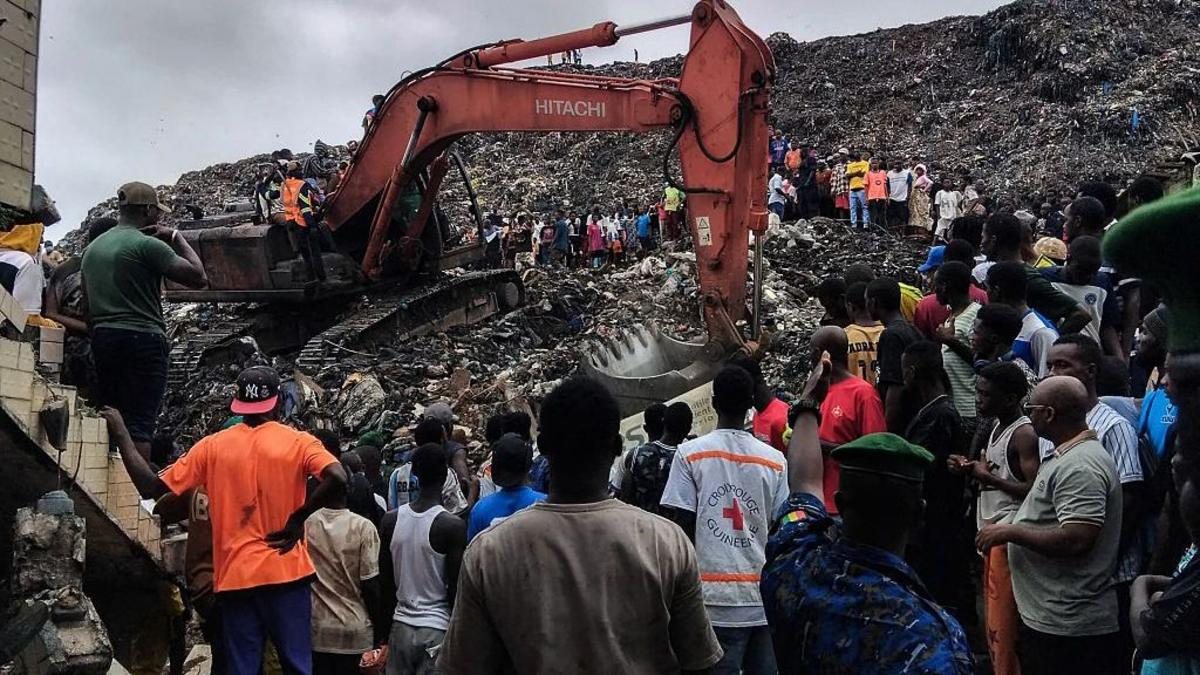
Guinea's government has ordered a mass clean-up of the capital, Conakry, setting a deadline of 31 December for rubbish to be cleared from the city and its suburbs, according to BBC News Africa.
The directive comes months after the city's main waste dump collapsed, killing 31 people. The site has been shut since the disaster, and waste has been building up outside homes and along streets, with illegal dumping on the rise.
Prime Minister Amadou Oury Bah announced the deadline on Wednesday, saying he was passing on an instruction from the country's president, Mamady Doumbouya.
"Conakry must be completely clean by the end of December," the prime minister said.
A city producing 3,000 tonnes of waste a day
Speaking at a public forum on sanitation, Sanitation Minister Aboubacar Camara said Conakry generates roughly 3,000 tonnes of waste every day.
He blamed shortcomings in the collection system for much of that rubbish ending up on the streets.
Mr Bah urged local authorities to take a bigger role in organising waste collection, arguing that the work could also provide employment for young people. He said the national government would play its part but that municipalities needed to organise themselves.
New disposal site planned
The prime minister outlined steps the government says it is taking to improve waste collection and recycling. These include a national sanitation fund intended to guarantee financing for the sector.
Mr Camara said negotiations with a waste collection operator had been concluded. Under the plan, equipment will be used to move waste from transit and sorting centres to a new disposal site at Baretodé, outside the capital.
The government also intends to turn the closed dump into an urban park, according to the prime minister.
A site with a deadly history
The disaster struck in August, when heavy rains triggered a landslide at the landfill in Conakry's Dar es Salaam neighbourhood. Rubbish collapsed onto nearby homes, killing 31 people and injuring others. The site was subsequently closed permanently.
It was not the first tragedy there. In 2017, ten people died at the same dump.
Authorities had previously told people living near the site to relocate, but many residents chose to remain in the area.
A wider African challenge
Conakry's troubles reflect a problem faced by many fast-growing African cities, where waste volumes often outstrip the capacity of collection and disposal systems. Uganda's capital, Kampala, also suffered a deadly collapse at its Kiteezi landfill, while in Kenya, Nairobi's Dandora dumpsite has long raised concerns among nearby residents about health and safety.
Whether Conakry can meet the end-of-year deadline will depend largely on how quickly the new collection arrangements and the Baretodé disposal site become operational, and on how far municipalities step up as the government has demanded.
This story was prepared by the Hamasta Newsdesk with AI assistance, based on reporting by BBC News Africa. Read the original report. Photo: BBC News Africa.





Show the impact of your work.
Impact stories, campaign videos and community engagement for NGOs and programmes.

More in International
See all
Ten dead, more than 1,200 arrested and 150,000 on the move: Guinea's ban on small-scale gold mining turns deadly
Guinea jails 22 ex-officials and 202 others in illegal gold mining crackdown
IMF approves $425m three-year programme for Guinea to back economic reforms

Counties told to sort waste at source and plan housing with drainage as Kisii hosts World Cities Day
Kenya seeks stronger partnerships to turn waste into jobs ahead of circular economy plan
Global Community Remarks
0