
Spain snap election: Viral vote-rigging claims fall apart under scrutiny
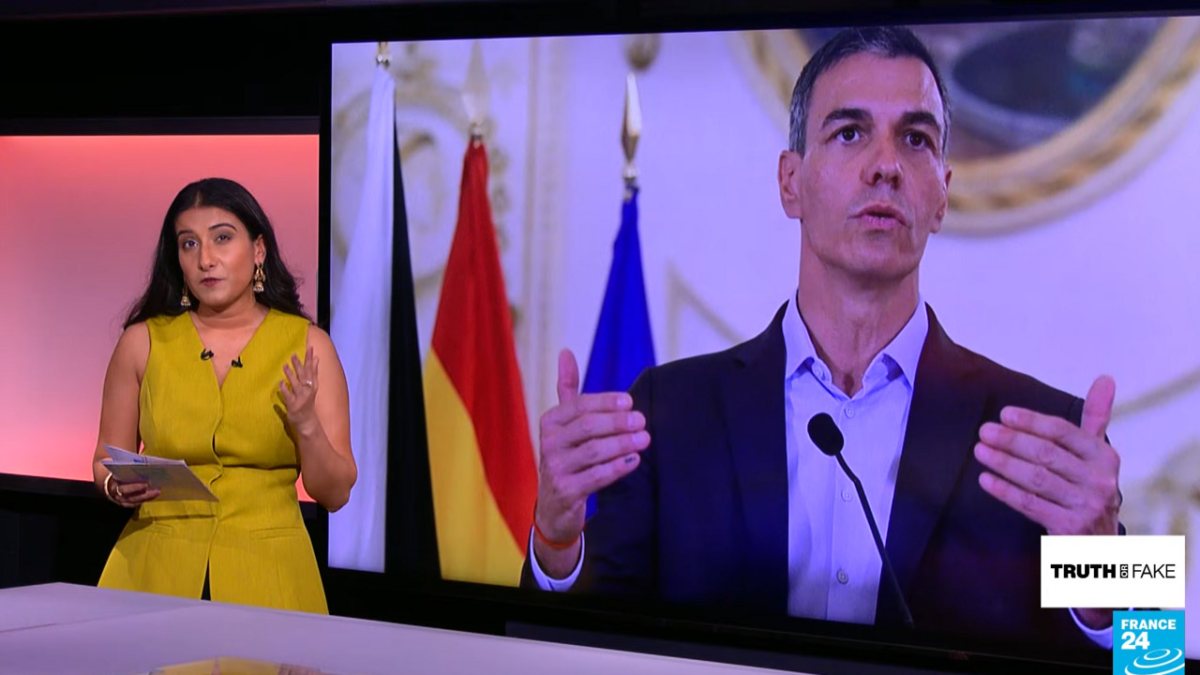
A wave of social media claims that Spain's snap parliamentary election on Sunday is being rigged does not stand up to scrutiny, according to a fact-check by France 24.
Posts circulating widely online accuse outgoing Prime Minister Pedro Sánchez's Socialist government of trying to manipulate the result to hold on to power. The allegations range from undocumented migrants being illegally signed up to vote to suspicions about postal ballots and the vote count.
The Spanish word pucherazo, meaning election rigging, has repeatedly surfaced on social media in the run-up to polling day. France 24 found that the claims misrepresent how the country's electoral system operates.
Migrant registration claims
One of the most widely shared narratives centres on immigration. A post viewed hundreds of thousands of times alleged that residents of Alcorcón, a municipality on the edge of Madrid, had found strangers "fraudulently registered" at their homes.
An article in La Gaceta, a media outlet owned by a foundation chaired by far-right Vox party leader Santiago Abascal, said those involved were undocumented Moroccan migrants. It portrayed the registrations as a Socialist scheme to stay in office and said dozens of residents had uncovered the deception. The story spread on Facebook and TikTok.
Alcorcón's municipal authorities, however, rejected claims of mass fraudulent registrations. Although the article spoke of dozens of residents, it named only two specific cases, and local officials said both had since been resolved.
Crucially, the claims confuse two separate registers. Appearing on Spain's municipal residents' list, the padrón municipal, does not give anyone the right to vote. Only Spanish nationals can vote in parliamentary elections, meaning that even a migrant wrongly listed at another person's address would not be able to cast a ballot on Sunday.
Doubts over postal voting
Postal voting has also come under suspicion, with users suggesting it could be used to alter the outcome. Abascal himself has urged Spaniards not to vote by post, adding to the mistrust.
Experts told the news agency AFP that the system has several safeguards against fraud. Voters must prove their identity twice: once when applying for a postal vote and again when handing in the envelope containing their ballot.
The envelopes are then kept securely by the postal service until they are delivered to the relevant polling stations on election day.
The role of Indra
Other posts target Indra, a Spanish technology company in which the state holds a stake. Some users have argued that this stake could allow Sánchez to influence the vote count.
France 24 noted that Indra does not count ballots. In Spain, votes are tallied by hand at each polling station in a public process that party representatives can observe.
The company's job is to process and relay preliminary results on election night. Electoral authorities then verify the official results. In other words, Indra communicates the figures rather than deciding them.
Distrust before the polls open
None of the viral allegations offers evidence that the election is being rigged, according to France 24. Even so, their spread is feeding scepticism about Spain's electoral process before a single polling station has opened.
The episode reflects a wider pattern in which election-related misinformation circulates rapidly online in the days before a vote, often relying on misunderstandings of how registration, voting and counting actually work.
This story was prepared by the Hamasta Newsdesk with AI assistance, based on reporting by France 24. Read the original report. Photo: France 24.
Every moment, captured beautifully.
Events, corporate portraits, products and editorial shoots by our newsroom photographers.






More in International
See all
Spain's far-right Vox eyes kingmaker role ahead of November 29 snap election

Spain votes in snap election as conservatives edge Socialists in polls
Spain heads to polls deeply divided as far-right Vox eyes first role in government

Spain election: Feijóo, Sánchez and Abascal lead the race to watch on 29 November
Spain's Sánchez admits 'mistakes' in only TV debate before November 29 poll

Global Community Remarks
0