
EU budget summit collapses as leaders split over Ukraine loan and spending cuts
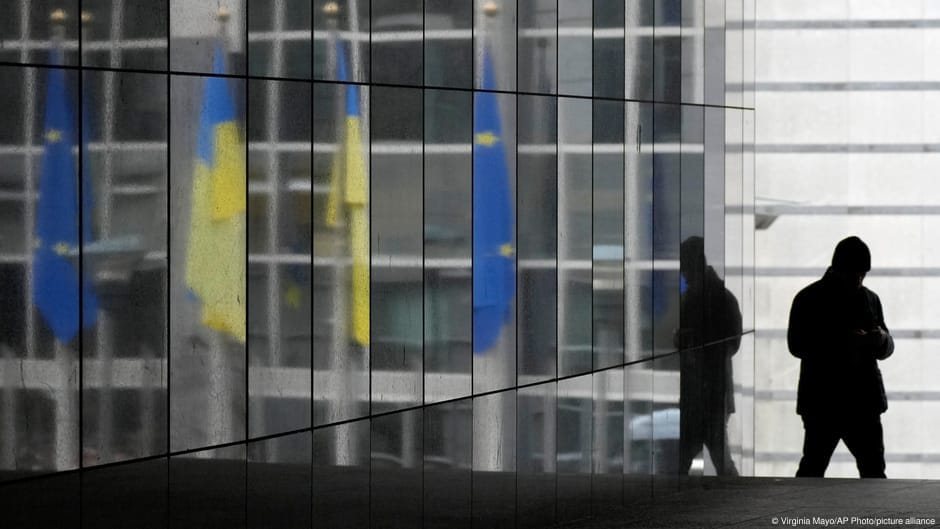
A summit of European Union leaders on the bloc's next long-term budget ended in failure after talks broke down late on Thursday, exposing sharp divisions over funding for Ukraine, the size of the budget and a proposed tax on digital companies, according to DW News.
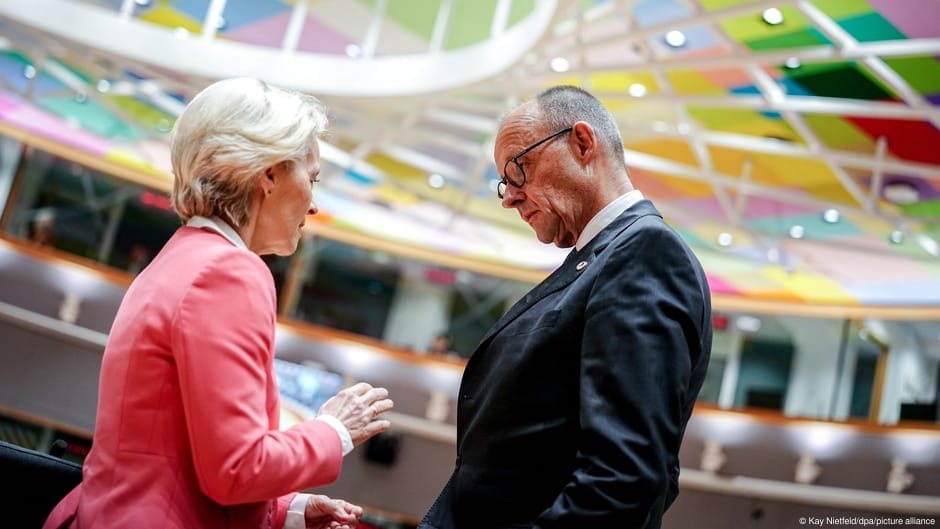
Leaders had gathered in Brussels expecting tough negotiations over the multitrillion-euro budget covering 2028 to 2034. Instead, discussions unravelled within the first day, and the planned second day of talks was not even attempted.
The EU has set itself a deadline of the end of 2026 to agree the budget. Leaders are expected to meet again in late December.
Walkout and public barbs
Tensions boiled over when the prime ministers of Denmark, Sweden, Belgium and Austria, who all want a smaller budget, walked out of smaller group meetings, saying the mood was not constructive, DW News reported.
Hungarian Prime Minister Peter Magyar described the summit as completely unnecessary and blamed European Council President Antonio Costa, who called the meeting and is responsible for mediating the talks. Costa defended his decision, saying the gathering had helped him identify the outlines of a possible compromise in December.
Jacob Funk Kirkegaard, an economist at the Brussels-based Bruegel think tank, told DW News that breakdowns, recrimination and political drama are a normal feature of every long-term EU budget negotiation.
Germany's Ukraine condition
Before the summit, Germany said it would only approve the budget if all other member states backed an additional €45 billion support loan to fund Ukraine's war effort through 2027.
Hungary, Czechia, Bulgaria and Slovakia have resisted, arguing that financing weapons for Ukraine will prolong the war. Slovak Prime Minister Robert Fico went as far as accusing Berlin of blackmail.
Germany, Europe's largest economy, contributes about a quarter of the entire EU budget. After the summit, Chancellor Friedrich Merz said hundreds of billions of euros still had to be cut and that the proposals tabled so far could not form the basis of an agreement.
"The budget cannot grow indefinitely, and the burden of financing it must be distributed fairly." — German Chancellor Friedrich Merz
The European Commission's original proposal of about €1.786 trillion has already been trimmed by €204 billion. Costa told leaders he plans to remove between €220 billion and €230 billion in his next draft.
Two rival camps
Berlin's push for cuts is supported by six other net-contributing countries, a group calling itself the "Sensible Seven". Opposing them are 17 member states, led by France and Italy, who want the budget to grow. They call themselves the "Friends of Cohesion", after the EU funds that transfer wealth from richer regions to poorer ones.
Under the current draft, the share of spending on agriculture, fisheries and cohesion falls from 59.1% to 42.4%, while the share for competitiveness, security and defence rises from 17.7% to 27.7%, a shift Germany has demanded.
Digital tax row
The proposal also includes an EU-wide 3% levy on revenue from online advertising, online marketplaces and the monetisation of user data. The idea, first floated by French President Emmanuel Macron, is estimated to raise €5 billion a year paid directly into the EU budget, and could set the bloc on a collision course with the United States.
Ireland, which hosts the European headquarters of Google, Meta, Apple, Microsoft and LinkedIn, has raised concerns. Irish Prime Minister Micheal Martin, who could still veto the plan, said the tax sends the wrong message.
Some capitals worry that without its own revenue sources, the EU's strong standing on international markets could suffer. The bloc has about €860 billion in outstanding debt from pandemic recovery and support for Ukraine. Its triple-A rating could come under threat if Marine Le Pen, the far-right front-runner in France's presidential election, wins in the spring and cuts French contributions as promised.
Kirkegaard said net contributors such as Germany, the Nordic countries and the Netherlands are now more open to new EU revenues because they would bear higher interest costs if the rating were lost.
Not all experts agree. Cristina Enache of Tax Foundation Europe told DW News that in countries with digital services taxes, the economic cost has exceeded the revenue raised, citing Spain, where collections fell well short of expectations.
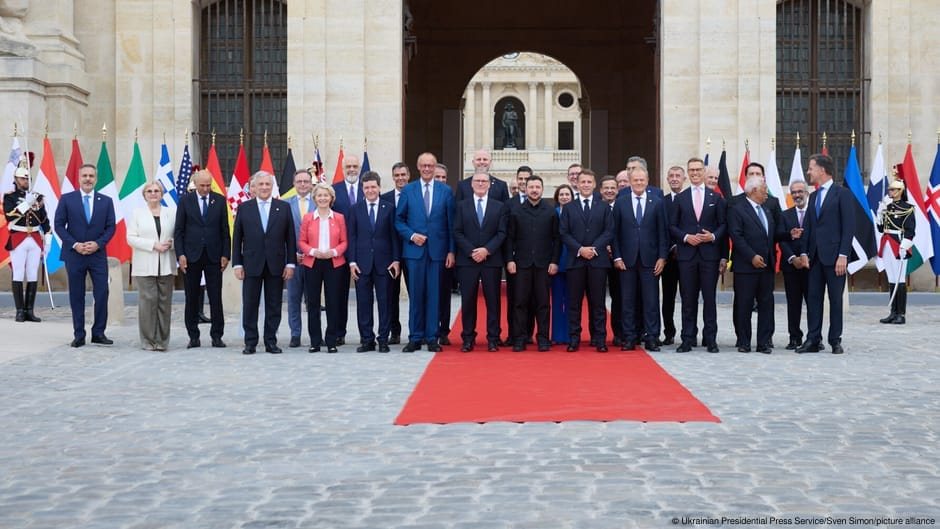
This story was prepared by the Hamasta Newsdesk with AI assistance, based on reporting by DW News. Read the original report. Photo: DW News.




Know what people say about you.
Media monitoring, audience insights and strategic communication for your brand.


More in International
See all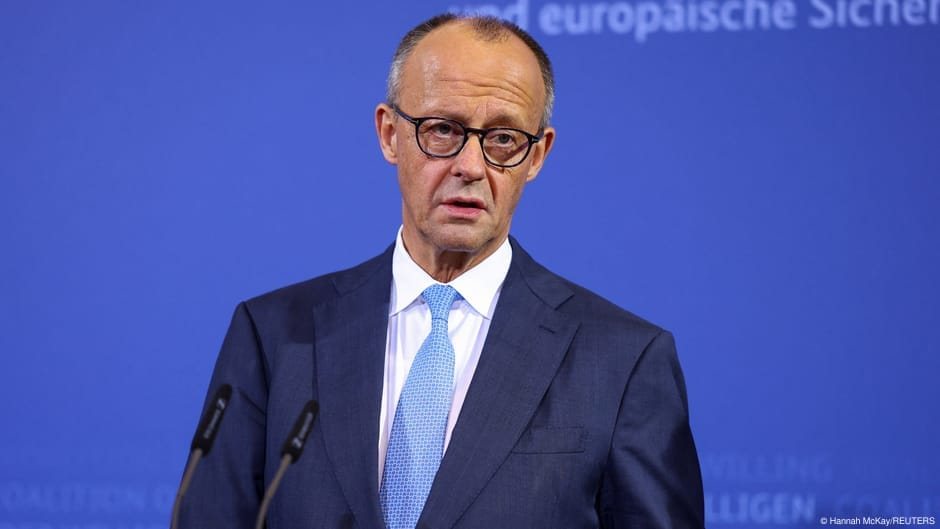
Merz says Ukraine talks with Europe at the table will happen 'soon'
EU leaders cut budget summit short as 2028-2034 spending talks stall
EU leaders meet in Brussels over divided budget and €45bn Ukraine loan

Poland to create no-fly zone along Ukraine border, urges NATO allies to follow

Macron calls on Ukraine's allies to reopen debate on Kyiv joining NATO
Global Community Remarks
0