
Labor ousted in Victoria as Liberal-National coalition wins state majority
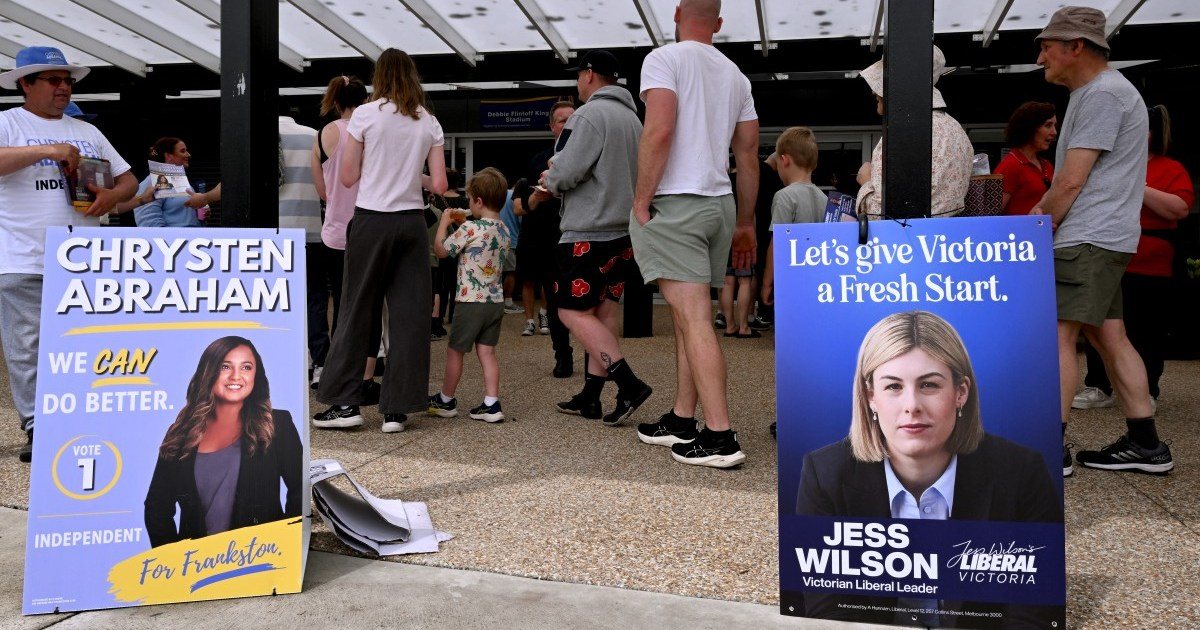
Australia's governing Labor Party has been swept from power in Victoria after the conservative Liberal-National coalition secured a majority in the state's lower house, ending 12 years of Labor government in one of the party's traditional heartlands.
The coalition had won at least 49 of the 88 lower-house seats, according to projections by the Australian Broadcasting Corporation (ABC) cited by Al Jazeera, with 57.5 percent of votes counted after Saturday's poll. The Greens had taken six seats and Labor only three, while 30 seats remained undecided.
Premier loses his own seat
Outgoing Premier Ben Carroll conceded defeat after losing his Melbourne seat of Niddrie. He accepted responsibility for the result, telling supporters, according to the ABC: "As leader, I take full responsibility."
Liberal leader Jess Wilson, 36, is now set to become Victoria's youngest premier and the first woman elected to the post. Wilson entered the state parliament in 2022 and took charge of the Victorian Liberal Party in November 2025.
She campaigned on cutting crime, improving roads and reducing state debt. Her financial plans include partially privatising Melbourne's sewerage network, scaling back infrastructure projects and reversing Labor's plans to expand free kindergarten.
Wilson acknowledged the size of the task ahead, cautioning that rebuilding the state would take years.
The coalition last won a Victorian election in 2010 and governed for four years before Labor returned to office.
Blow to Albanese
The result is a setback for Prime Minister Anthony Albanese, whose federal Labor government secured a second term in May 2025. A Newspoll survey published last week by The Australian newspaper suggested his approval rating had dropped to its lowest point since he took office, Al Jazeera reported.
The defeat came after months of turmoil within the state government. Carroll replaced Jacinta Allan as premier in July and set up a royal commission into allegations of criminal activity and corruption linked to major infrastructure projects.
Economic strain has also been building across the country. On November 3, the Reserve Bank of Australia raised its benchmark interest rate by 25 basis points to 4.85 percent, citing persistent inflation and uncertainty arising from the US-Israel war on Iran.
One Nation surges in regional areas
The election also revealed rising support for Pauline Hanson's far-right, anti-immigration One Nation party, especially outside Melbourne.
The party fielded candidates in all 88 lower-house constituencies, up from just five in the 2022 state election, according to the Reuters news agency.
Preliminary ABC figures released on Saturday evening showed One Nation drawing 32.3 percent of first-preference votes in regional Victoria, compared with 15.7 percent in metropolitan areas. Despite that, the party had not yet won a lower-house seat in the latest projections.
Hanson told supporters that her party was closing in on both major parties, saying the political establishment was aware of the threat.
One Nation's showing in the 40-member upper house could shape how much influence it holds over the incoming government's legislative programme.
Counting is continuing, and the final make-up of the state parliament has yet to be confirmed.
This story was prepared by the Hamasta Newsdesk with AI assistance, based on reporting by Al Jazeera. Read the original report. Photo: Al Jazeera.
Every moment, captured beautifully.
Events, corporate portraits, products and editorial shoots by our newsroom photographers.






More in International
See all
New Zealand's ruling coalition falls one seat short of majority after final count
'We shall arrest Jessica, without hesitation': A dozen generals held in 15 months as Muhoozi's crackdown reaches Uganda's vice president
Uganda Army Chief Muhoozi Deactivates X Account After Threatening Vice President Jessica Alupo
Gen Z banker Jesse Munene eyes Westlands parliamentary seat on Wiper ticket
Israel's Eisenkot wins Lieberman as first coalition partner in bid to form government
Global Community Remarks
0