
US moves to rebuild ties with Sahel juntas as Russia and China gain ground
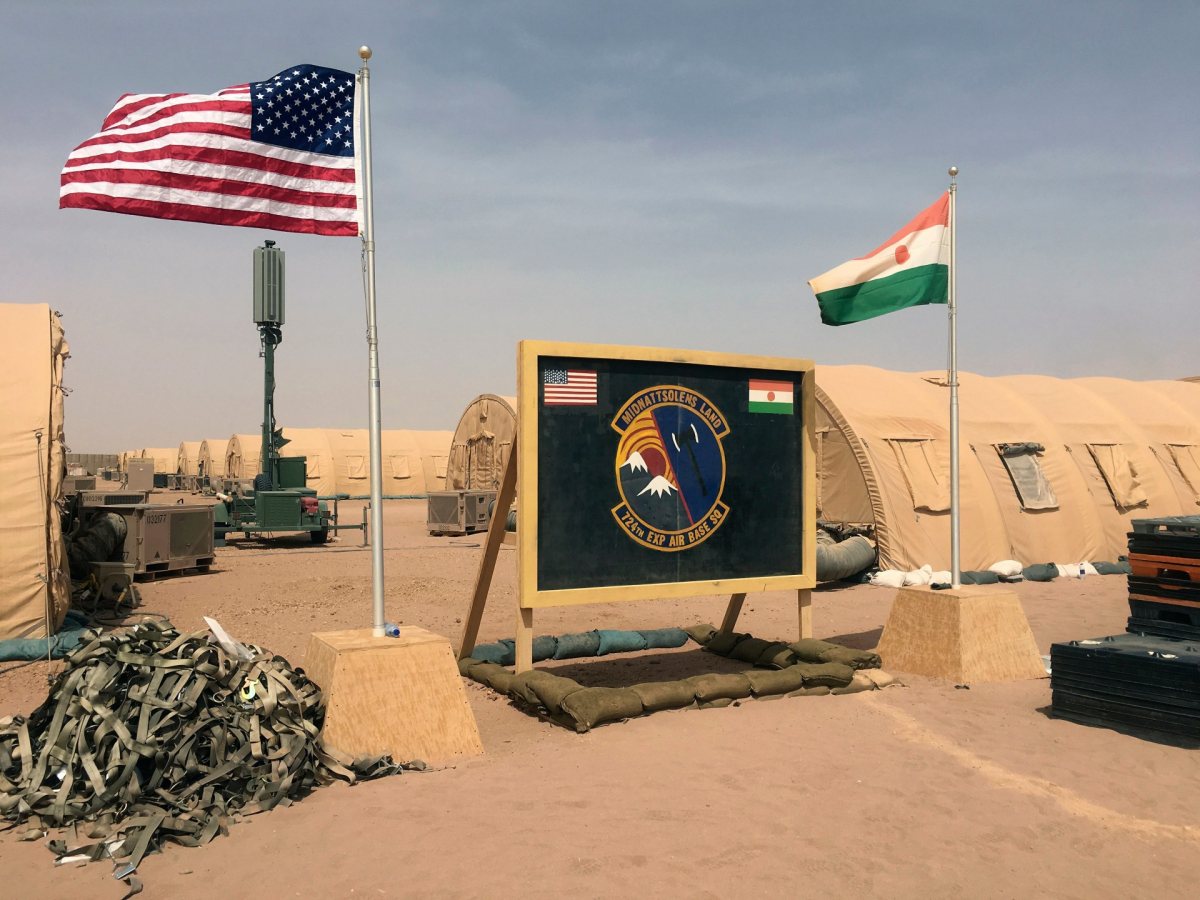
The United States is trying to repair relations with the military governments of Mali, Burkina Faso and Niger, a region where Russia has built up a security presence and China has deepened its economic footprint, according to Al Jazeera.
Earlier this year, senior US State Department official Nick Checker travelled to all three West African countries. The visits signalled a fresh round of diplomatic engagement with governments whose ties to Western powers have soured after a string of military coups.
A change of course
The outreach marks a shift for Washington. In September 2024, the US completed its military withdrawal from Niger, closing a decade-long presence in a country that had been central to American counterterrorism operations. Among the facilities handed back was Air Base 201, a drone base near the northern city of Agadez.
Niger's military government, which ousted elected President Mohamed Bazoum in July 2023, ended its military cooperation agreement with Washington, leading to the departure of about 1,000 US troops. The US had already suspended security cooperation after the coup.
Coups in Mali in 2020 and 2021, Burkina Faso in 2022 and Niger in 2023 took place amid political instability, worsening insecurity and growing frustration with Western military interventions, especially those led by France, the former colonial power in all three states. Armed groups linked to al-Qaeda and ISIL (ISIS) continued to spread across parts of the Sahel despite years of international counterterrorism efforts.
Russia fills the gap
Russia stepped in as relations with the West deteriorated, offering military help and political backing first through the Wagner Group and later through Africa Corps, which operates under Russia's Ministry of Defence. Moscow has presented itself as a partner that respects national sovereignty and does not attach demands for democratic reform.
Mohamed Mouttii, a political researcher at the Arab Center for Research, told Al Jazeera that Russia's rise reflected a political opening created by the breakdown of the region's ties with its traditional Western partners, rather than simply a military expansion.
Still, continuing violence by armed groups has raised doubts about how effective these new security arrangements have been.
In September 2023, the three countries formed the Alliance of Sahel States (AES), a mutual defence pact that became a confederation in July 2024. They later left the Economic Community of West African States (ECOWAS).
Minerals and the China factor
The Sahel's mineral wealth adds to its appeal. Niger holds large uranium reserves, gold mining is a major activity in Mali and Burkina Faso, and lithium deposits are attracting interest as global demand for battery minerals grows.
Here Washington faces an entrenched competitor in China, which has spent two decades investing across Africa in infrastructure, telecommunications, mining and energy, and holds a strong position in global mineral processing.
Ahlam Qafas, an economics professor in the Moroccan city of Kenitra, told Al Jazeera that partnerships should be judged by how far they support local industrialisation, jobs and economic diversification. She said extraction brings limited benefits if it does not build local production capacity.
Questions over democracy and aid
President Donald Trump's administration has shown willingness to deal directly with the juntas, despite long-standing US concerns about democratic governance. Under his predecessor, Joe Biden, Washington restricted aid to Niger after the 2023 coup and urged a return to constitutional rule.
US efforts are further complicated by the restructuring of foreign assistance and the dismantling of the US Agency for International Development (USAID), which raises questions about what Washington can offer beyond counterterrorism and commercial deals in a region facing poverty and unemployment.
For their part, the Sahel governments appear to be diversifying partners rather than swapping one for another, seeking greater control over the terms of their engagements.
Mary Joyce Takali, cofounder and executive director of Malkia Africa Network, said success would depend on whether Washington offers consistent partnerships that reflect African priorities, rather than viewing the continent mainly "through the prism of great-power competition".
This story was prepared by the Hamasta Newsdesk with AI assistance, based on reporting by Al Jazeera. Read the original report. Photo: Al Jazeera.




Know what people say about you.
Media monitoring, audience insights and strategic communication for your brand.


More in International
See all
At least 13 Niger National Guard soldiers killed in attack near Mali border

Mali come from behind to beat Belgium 2-1 at FIFA U-17 World Cup in Doha
China and ASEAN miss 2026 target for South China Sea code of conduct
Mali top Group G with perfect record as Côte d’Ivoire reach U-17 World Cup knockouts

Gold slides below $3,800 to one-year low, raising worries for African producers
Global Community Remarks
0