
Swiss voters back easing of arms export rules, exit polls suggest
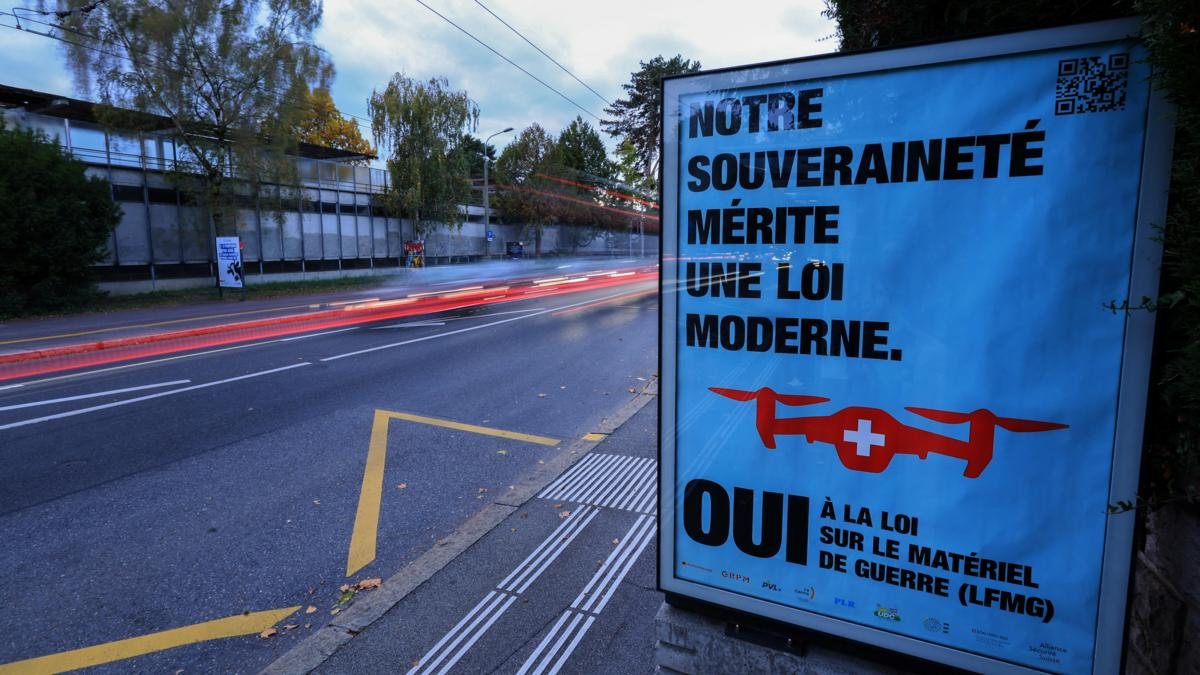
Voters in Switzerland appear to have approved a proposal to relax the country's strict rules on arms exports, according to exit polls reported by BBC News World, in a referendum that opponents say threatens the nation's traditional neutrality.
A projection by the polling institute GFS Bern, released shortly after voting closed at midday local time (11:00 GMT), put the Yes side ahead with 54% of the vote against 46% for the No campaign.
The reform would allow Swiss manufacturers to sell weapons to 36 Western countries even if those countries are engaged in armed conflict.
What the change means
Under the current rules, Switzerland does not export arms to nations involved in armed conflicts. It also requires buyers to consult Bern if they plan to pass Swiss-made weapons on to another country.
The amendment lifts these restrictions for the 36 listed countries. They include every member of the European Union and the European Free Trade Association, with the exception of Liechtenstein, which has no army. Argentina, Australia, Japan, Canada, New Zealand, the United States and the United Kingdom are also on the list.
Buyers in those countries would no longer need to seek Swiss permission before reselling the weapons to a third country in future.
Ukraine still excluded
Despite the war in Ukraine being a key driver of the debate, Kyiv will not benefit from the change. The Swiss government says exports to Ukraine remain prohibited. Russia is under an embargo, and Switzerland's neutrality laws also bar it from supplying weapons to Ukraine.
Why the rules were revisited
The Swiss parliament voted in 2025 to loosen the restrictions. Russia's full-scale invasion of Ukraine in 2022 had heightened security concerns across Europe, and Swiss arms exports fell sharply as European customers turned to other suppliers.
Supporters of the reform argued that easing the rules was essential to keep the domestic arms industry competitive, warning that the sector would be at risk if nothing changed.
However, left-wing parties and non-governmental organisations used Switzerland's system of direct democracy to force a national vote. They argued the measure endangered Swiss neutrality and amounted to giving in to the arms lobby.
Reactions
Marianne Binder, an official of the Centre Party who backed the Yes campaign, welcomed the projected outcome, though she described the exclusion of Ukraine as a drawback.
Speaking to Swiss broadcaster SRF, she said voters appeared to have understood that the security situation had changed fundamentally and that Switzerland belonged within the Western security framework.
Rights groups were critical. Amnesty International Switzerland and other NGOs condemned the move, describing it as "the dismantling of the main safeguards governing Swiss arms exports".
Switzerland's place in the arms trade
Data from the Stockholm International Peace Research Institute shows that Switzerland ranked as the world's 19th largest arms exporter between 2021 and 2025, accounting for 0.4% of global arms exports.
The final official result of the referendum is expected to confirm whether the projected majority holds.
This story was prepared by the Hamasta Newsdesk with AI assistance, based on reporting by BBC News World. Read the original report. Photo: BBC News World.


Take your event live to thousands.
Multi-camera live streams, panel discussions and digital broadcasts with professional crews.




More in International
See all
Saudi-led coalition says Yemen war could end quickly if Houthis accept UN plan
Iran's rial crashes past 3 million to the US dollar as war and sanctions bite
Bosnia expels four Iranians, three of them diplomats, over suspected spying
Sudan's missing: families search for loved ones lost to war, displacement and detention
Houthi advance on Aden threatens Yemen's last major aid gateway, experts warn
Global Community Remarks
0