
'If you are not given medicine, check your phone': SHA will now refuse to pay hospitals for drugs patients say they never got
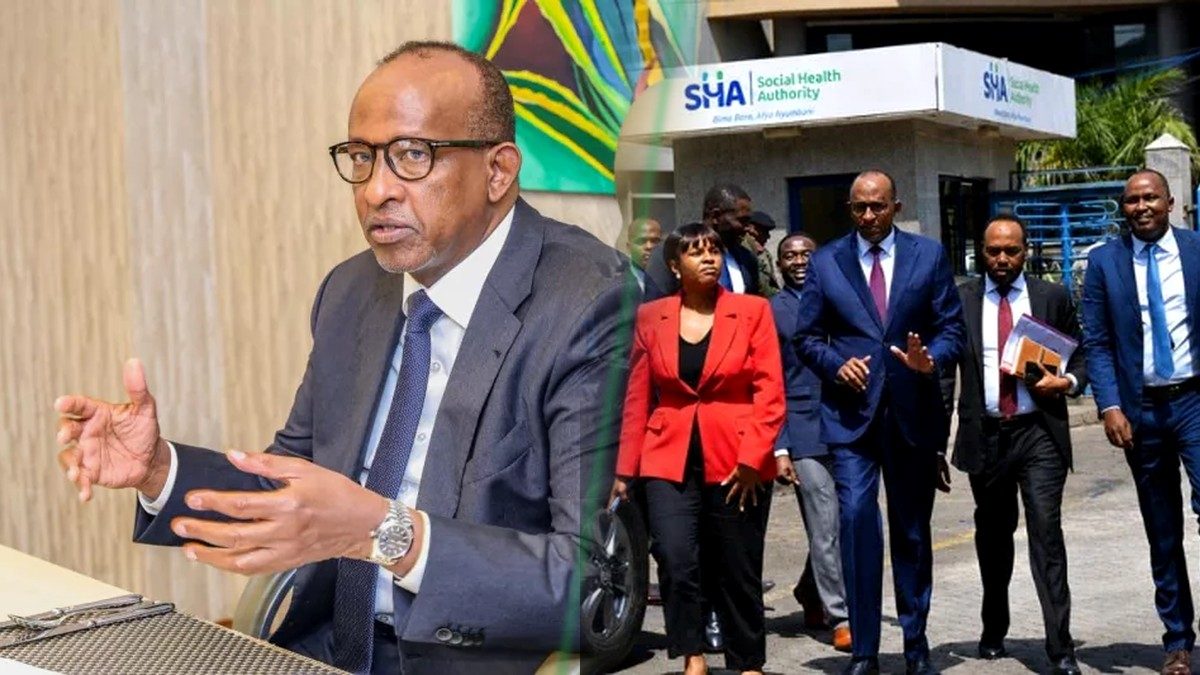
You see the doctor, you get your lab tests, you are handed a prescription, and then you are sent across the road to buy the drugs yourself. Health CS Aden Duale says that era should end, because hospitals will no longer be paid for medicines they claim to have dispensed but never did.
Speaking in Nairobi on Tuesday at the opening of the inaugural three-day Africa Health Data Forum, co-hosted with the World Health Organization, Duale said the Social Health Authority (SHA) has been running a verification system since November 1 that checks with patients directly before a facility is reimbursed for drugs.
"If you are not given medicine, check your phone," the CS told Kenyans.
How the SMS check works
- While still at the health facility, a patient receives a text message asking whether they received the medicines they were prescribed.
- If the patient says yes, the facility's claim goes through as normal.
- If the patient says no, SHA deducts the cost of the drugs from the claim and pays only for the other services, such as consultation and tests.
"If he says no, the Social Health Authority will pay everything else but not the medicine," Duale explained, according to The Star and The Eastleigh Voice.
The CS said the measure is meant to make sure public money only pays for services that patients actually receive, and to give ordinary Kenyans a direct say in holding facilities to account.
Doctors, machines, but no drugs
Duale said the government had received repeated complaints about facilities that have doctors, clinicians and diagnostic equipment, yet patients still leave without medicines. He also raised concern over private chemists that have sprung up around public hospitals, where many patients end up paying out of pocket after treatment.
This is not the first time the problem has surfaced. In April, Duale told the Senate that the Digital Health Superhighway had flagged patients who had consultations and laboratory tests but were not given drugs at the hospital pharmacy.
To close the supply gap, the ministry wants county facilities to buy their medicines from the Kenya Medical Supplies Authority (KEMSA), whose supply capacity Duale said has improved.
Data at the centre
The forum, running under the theme "Better Data, Better Health for All", brought together African governments, the African Union, the Africa Centres for Disease Control and Prevention, development partners, academia and civil society.
Duale said Kenya now uses real-time data to track hospital bed capacity, maternal health outcomes, disease trends and the availability of medicines. He urged African countries to build systems that talk to each other rather than fragmented platforms, warning against duplicated investments at a time when external development financing is shrinking.
He said countries cannot make informed decisions without reliable data, The Star reported.
For patients, the practical message is simple: keep your phone with you at the facility, read the SHA message, and answer it honestly. Your reply could decide whether the hospital gets paid for drugs you never received.
Photos: The Star (Health CS Aden Duale); The Eastleigh Voice / SHA on X (SHA headquarters). Thumbnail design: HAMASTA MEDIA.


Take your event live to thousands.
Multi-camera live streams, panel discussions and digital broadcasts with professional crews.




More in Health
See all
Only 19% of Kenyan women have ever been screened for cervical cancer, KNBS survey shows
Kenya–US health deal: PS Oluga calls for shared ownership as framework is finalised
Mbagathi Hospital expands diabetes clinic to five days a week
Congo's Ebola outbreak still out of control six months on, with over 11,000 cases
435,700 Kenyans have diabetes and don't know it: Doctors push free screening as survey finds only 7 in 100 at-risk adults think it could happen to them
Eight infected in Kenya, none in Nigeria: Pathologist Ahmed Kalebi wants answers on why Ebola spread from one patient here, including to four health workers
Global Community Remarks
0