
Mauritius drought slashes farm output as El Niño heat drives up food prices
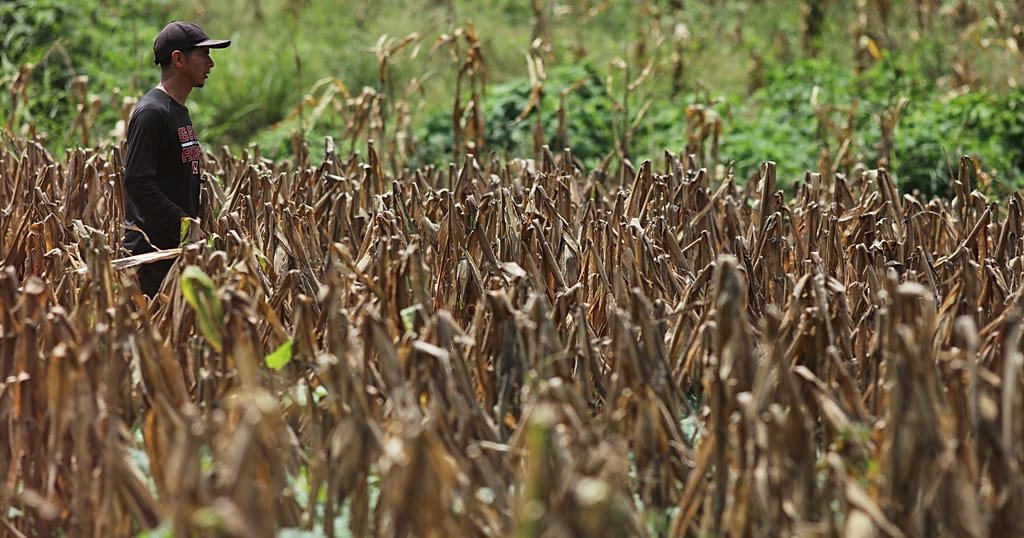
Farmers in Mauritius are counting heavy losses as a severe drought, worsened by El Niño-driven heat, cuts crop yields, raises the cost of irrigation and pushes food prices sharply higher, according to Africanews.
The Indian Ocean nation's water supply has been tightening since September. Mare aux Vacoas, the country's largest dam, is now at 33 per cent of capacity, compared with 74 per cent at the same time last year.
Production down by 40 per cent
On farmland on the outskirts of the capital, Port Louis, persistently high temperatures have held back the growth of vegetables.
Dharshini Anishta, who heads a local agricultural company, told Africanews that her firm had seen output fall by about 40 per cent over the three months since the problem began. She warned that the losses would grow if the dry conditions continued.
The damage is not limited to crops grown in the open. Greenhouses, often seen as a buffer against harsh weather, have also been affected as temperatures climb.
Local farmer Seesurrun Madhan said conditions both inside and outside the structures had risen by two to three degrees, leaving his peppers visibly scorched.
"That's why these peppers get burned like that," Madhan told Africanews.
Government turns to seeds and storage
The government has responded with measures aimed at shoring up agricultural production. These include developing crops that can withstand drought and installing facilities to store water.
Arvin Boolell, the Minister of Agro-Industry, Food Security, Blue Economy and Fisheries, said the country's research centre was producing drought-resistant seeds. He added that Mauritius was working with international lenders, including the World Bank and the International Monetary Fund.
According to the minister, these institutions are beginning to recognise the particular challenges facing small island developing states.
Beyond government action and international backing, local organisations are campaigning for simple, low-cost ways of storing water so that farmers can better cope with long dry spells.
Little relief in sight
The outlook offers limited comfort. Forecasters expect El Niño to strengthen and persist through the summer, with some below-average seasonal rainfall predicted from the end of the month, Africanews reported.
For households, the combination of shrinking harvests and costlier irrigation is already being felt in higher food prices, and growers warn the situation could worsen without significant rain.
El Niño is a recurring climate pattern linked to the warming of the Pacific Ocean, and its effects on rainfall and temperatures are felt across many parts of the world, including Africa.
This story was prepared by the Hamasta Newsdesk with AI assistance, based on reporting by Africanews. Read the original report. Photo: Africanews.



Know what people say about you.
Media monitoring, audience insights and strategic communication for your brand.


More in Environment
See all
October 2026 Hottest on Record as Experts Warn El Niño Could Run Into 2027

Why Nairobi is sweltering despite expected El Niño rains, according to weather experts
Climate activists march in Nairobi, push government to boost clean energy funding

COP31 talks run into overtime as rows over fossil fuels and climate cash deepen
Africa presses for more climate cash at COP31 as EU insists on using existing pledges

Global Community Remarks
0