
Land mine casualties hit five-year high as Myanmar, Syria top global toll
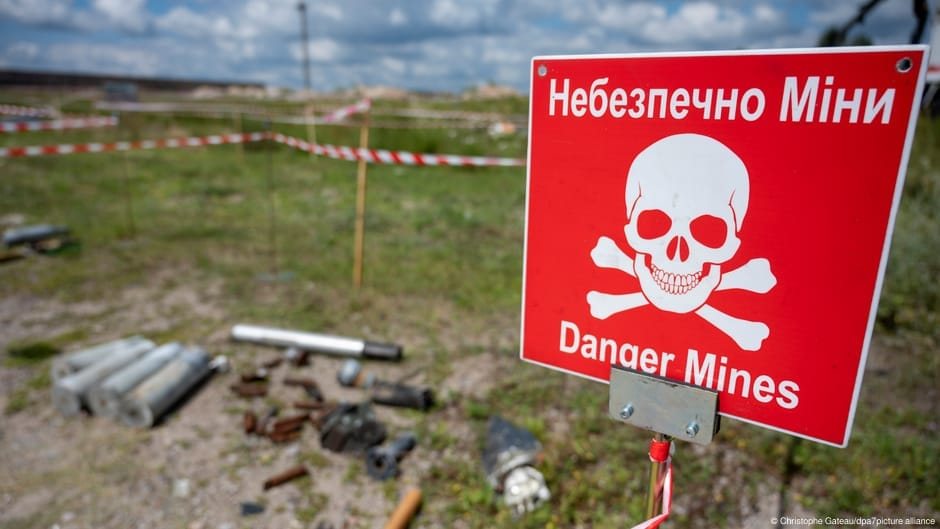
Land mines killed or injured more people in 2025 than in any year since 2020, with Myanmar, Syria and Afghanistan recording the heaviest tolls, according to the annual report of the International Campaign to Ban Landmines (ICBL), as reported by DW News.
The campaign recorded at least 6,929 victims last year, a rise of about 10% on the previous year. Civilians accounted for roughly four in every five victims, and children made up half of those civilians, the report said.
Experts cited by DW News warned that the real figure is probably higher, because many deaths and injuries caused by land mines are never recorded as such.
Myanmar and Syria worst affected
Myanmar topped the global casualty list for the third consecutive year, with 1,891 victims. The ICBL linked the toll to what it described as "massive" new use of mines in the country.
Syria followed with 1,602 casualties, a jump of 50% on the year before. The report tied the increase to the large-scale return of displaced people after the fall of former president Bashar Assad, as families moved back into areas still littered with explosives.
Afghanistan ranked third, with 497 casualties.
Treaty under strain
The report raised concern over the future of the Mine Ban Treaty, widely known as the Ottawa Treaty, which outlaws the use, production, stockpiling and transfer of anti-personnel mines. Major military powers including China, India, Russia, Israel, North Korea and the United States have never joined it.
Last year, five European NATO members that border Russia, namely Estonia, Latvia, Lithuania, Finland and Poland, withdrew from the treaty. Ukraine has also announced its withdrawal, although this will only take legal effect once the war with Russia ends.
"The treaty's norms face their greatest test since 1999," the report said.
Ukraine justified its decision by pointing to Russia's conduct. Russia has never ratified the treaty and, according to the report, has used anti-personnel mines extensively on Ukrainian territory since launching its full-scale invasion in 2022.
Even so, the ICBL criticised Kyiv. It said Ukraine remains fully bound by the treaty for now but has breached its ban on producing anti-personnel mines, including by manufacturing 3D-printed mines and mines designed to be dropped from drones.
Vast areas still contaminated
The report identified eight countries with what it called "massive" contamination, meaning more than 100 square kilometres of land affected by mines. They are:
- Afghanistan
- Azerbaijan
- Cambodia
- Iraq
- Morocco
- North Korea
- South Korea
- Ukraine
Morocco is the only African country on the list.
A long-term toll
Since 1999, land mines have killed 49,859 people and injured 118,525 others, according to the Landmine and Cluster Munition Monitor, the research arm of the ICBL and the Cluster Munition Coalition.
The latest figures suggest that, more than two decades after the treaty came into force, the human cost of land mines is rising again, driven by new conflicts, renewed use of the weapons and the return of displaced people to contaminated land.
This story was prepared by the Hamasta Newsdesk with AI assistance, based on reporting by DW News. Read the original report. Photo: DW News.




Know what people say about you.
Media monitoring, audience insights and strategic communication for your brand.


More in International
See all
UK, Gambia and 12 other nations back ICJ ruling on Myanmar's Rohingya genocide

Gambia hails ICJ ruling that Myanmar committed genocide against Rohingya

World Court set to rule on The Gambia's Rohingya genocide case against Myanmar
EU moves to revive long-stalled cooperation deal with post-Assad Syria
'This cannot become the new normal': UN counts 25 seafarers killed around Hormuz as Iran says tankers are hitting mines

Global Community Remarks
0