
Nairobi braces for longer water rationing as Thika Dam falls to 45% capacity
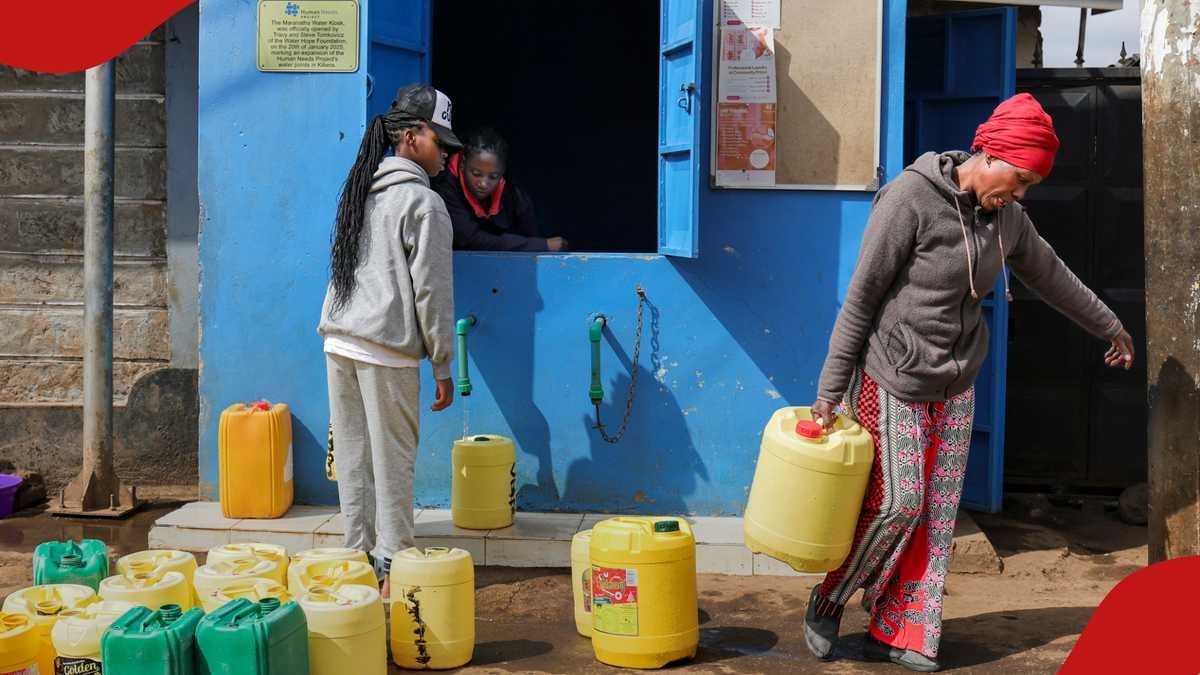
Residents of Nairobi and parts of three neighbouring counties should prepare for prolonged water shortages after Thika Dam, the capital's main water source, dropped to 45% of its storage capacity, Nairobi Water has warned.
According to Tuko, the utility said in a public update on November 25, 2026 that the reservoir, also known as Ndakaini Dam, held 32.179 million cubic metres of water as of November 21. When full, the dam stores 70 million cubic metres.
The utility asked households to be careful with water, saying that "every drop we save at home helps keep taps running for everyone."
Poor rainfall behind the decline
The falling levels have been linked to below-average rainfall in the dam's catchment area, which has reduced the volume of water flowing into the reservoir.
To stretch the remaining reserves over the coming months, Nairobi Water has scaled down the amount of water it draws from the dam.
The latest update comes about two weeks after the utility, on November 9, 2026, cut water production by 35% with immediate effect at the Ngethu and Kigoro treatment plants. Both plants are fed by Thika Dam.
Tuko reported that the new figures show the strain on the reservoir has not eased since that reduction was announced. No further production cut was announced in the November 25 update.
City heavily reliant on one source
Data from the National Environment Management Authority, cited by Tuko, shows that Thika Dam provides roughly 84% of Nairobi's piped water. The rest comes mainly from:
- Sasumua Dam in Nyandarua, at about 12%
- Ruiru Dam, at about 4%
- Kikuyu Springs, which serve areas including Karen, Dagoretti, Kawangware and Riruta
Neighbouring counties also hit
The shortage extends beyond Nairobi County. Households in parts of Kiambu, Kajiado and Machakos counties are also affected, as six water service providers draw from the same Thika-Ndakaini system.
These are Kiambu Water, Githunguri Water, Karuri Water, Mavoko Water, Olkejuado Water and Oloolaiser Water.
Residents urged to prioritise essential use
Nairobi Water has called on customers to avoid wastage and to focus on essential household needs while the reduced supply schedules remain in force.
Residents can reach the utility and report supply problems through the *260# USSD code or its toll-free customer support line.
The company said it is keeping a close watch on dam levels and weather conditions, and will periodically review production volumes depending on how the reservoir recovers and how much water flows in.
Nairobi Water acknowledged the inconvenience caused by the reduced supply and appealed to the public for patience and cooperation.
Stronger inflows into Thika Dam are expected to be the key factor in easing the current rationing schedules, according to Tuko.
This story was prepared by the Hamasta Newsdesk with AI assistance, based on reporting by Tuko. Read the original report. Photo: Tuko.



Grow an audience that listens.
Social media management, digital campaigns and online storytelling that converts.



More in Environment
See all
Loss and damage fund struggles as climate-hit nations wait for money

KWS launches audit at Ol Pejeta after 17 black rhinos die in nine months
South African cities tighten water curbs as strong El Niño raises drought fears

WRA Orders Commercial Water Users to Install Smart Meters by April 15, 2027

Kenya Met: Rain expected in 30 counties as highland nights dip below 10°C

Global Community Remarks
0