
Thailand presses Myanmar over arsenic pollution from rare earth and gold mines
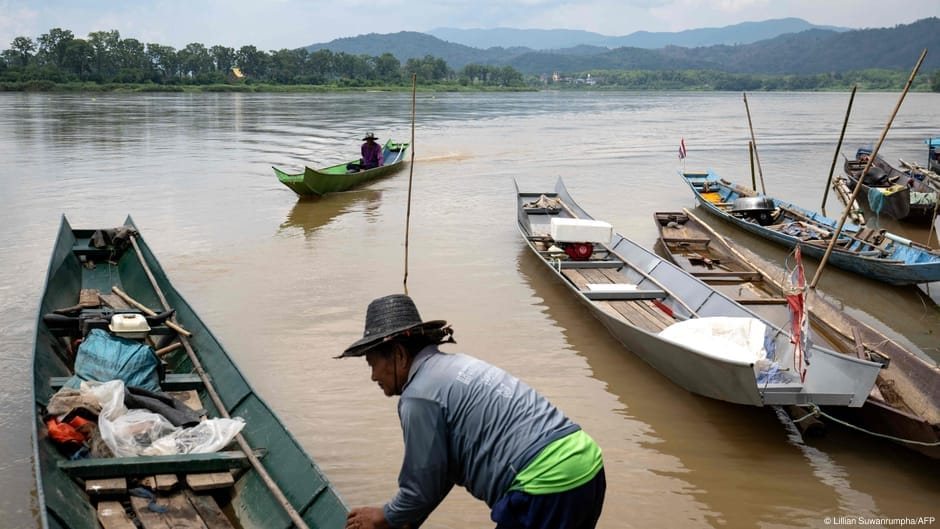
Thailand has stepped up pressure on Myanmar over toxic river pollution that Thai officials blame on rare earth and gold mines across the border, according to DW News.
The two neighbours held their first joint working group in Bangkok this week. Thai officials said tests showed that mines inside Myanmar were the source of contamination flowing downstream into northern Thailand. China, the main buyer of rare earth materials from Myanmar, also took part in the talks.
Joint sampling agreed, suspension request unresolved
The sides agreed to carry out joint water sampling on the Kok and Sai rivers. The exercise will cover 12 sampling points and is expected to start between December and January.
However, no public agreement was reached on Thailand's request for mining operations to be suspended for six months, DW News reported.
The Kok River, once known for its plentiful fish, is now contaminated with arsenic, mercury and other hazardous substances, threatening both the health and livelihoods of communities in northern Thailand.
Villages cut off from tap water
The talks came after authorities earlier this month halted tap water supplies to 14 villages in Mae Sai district, near the Myanmar border. Arsenic levels there were found to be almost 30 times above government limits.
This week, officials also advised residents to avoid eating certain shellfish and other river species after tests found dangerous levels of arsenic and lead in northern and northeastern Thailand.
Thai Deputy Prime Minister Yodchanan Wongsawat was blunt about where the problem originates.
"The source was from (Myanmar's) Shan state, no-one disagrees," he said at the talks.
Thai authorities have identified two gold mines across the border from Mae Sai as the main contributors to high arsenic levels in the Sai River.
Mines beyond the junta's reach
Most of the mines are in Shan State, where fighting has continued since the military seized power in 2021. The area is split among several armed actors, including Myanmar's military and the United Wa State Army, an ethnic armed group closely aligned with China. Several ethnic armed groups have operated in the region for decades.
The main mining belts, including sites in Shan State, lie outside the control of Myanmar's military-backed government. The mining boom is partly driven by China's dominant rare earth industry.
Yodchanan told Reuters that Thailand wants to establish whether the polluting mines are run under Myanmar government control or by other entities.
"If they cannot, we will ask China to help," he said, referring to whether Myanmar's authorities can control every mine.
Bangkok is also seeking Beijing's help to pressure private Chinese operators. A spokesperson for China's foreign ministry told AFP that Beijing "pays close attention" to the pollution and would offer technical support.
A difficult road ahead
Thanapon Piman, a senior research fellow at the Stockholm Environment Institute, told AFP that the talks were a first step towards agreeing on the evidence, without which measures such as stopping mining could not follow.
He cautioned, however, that it would be "really difficult" for Myanmar to intervene and halt the mining, given the ongoing civil war and the patchwork of armed groups controlling the area.
The dispute highlights the environmental cost of the global race for rare earth minerals, which are used in electronics, electric vehicles and other modern technologies.
This story was prepared by the Hamasta Newsdesk with AI assistance, based on reporting by DW News. Read the original report. Photo: DW News.



Grow an audience that listens.
Social media management, digital campaigns and online storytelling that converts.



Read also
UK, Gambia and 12 other nations back ICJ ruling on Myanmar's Rohingya genocide

Gambia hails ICJ ruling that Myanmar committed genocide against Rohingya

World Court set to rule on The Gambia's Rohingya genocide case against Myanmar
Land mine casualties hit five-year high as Myanmar, Syria top global toll
Guinea jails 22 ex-officials and 202 others in illegal gold mining crackdown
Global Community Remarks
0