
France falls into technical recession as budget fight and 2027 election loom

France has entered a technical recession after official figures showed its economy shrank for a second consecutive quarter, adding to the strain on a government already battling to control its deficit ahead of next year's presidential election.
Data released on Friday by INSEE, the national statistics office, showed gross domestic product in the eurozone's second-largest economy fell by 0.2 percent in the third quarter compared with the previous three months, according to Al Jazeera. The figure was revised down from an initial estimate of 0.1 percent.
A technical recession is generally understood as two quarters in a row of falling output. A wider recession also takes in other weakening indicators, such as employment.
What drove the decline
INSEE's breakdown pointed to stagnant domestic demand. Household consumption rose by 0.3 percent, but this was cancelled out by a 0.8 percent fall in business investment.
Trade also weighed heavily on growth. Exports dropped by 1.6 percent while imports edged up 0.1 percent, meaning foreign trade subtracted 0.6 percentage points from output.
The contraction puts the government's growth target of 0.5 percent for this year out of reach, Al Jazeera reported.
Budget under pressure
Prime Minister Sebastien Lecornu's minority government has struggled to pass its 2027 budget, which seeks to reduce the fiscal deficit from 5.4 percent of output this year to 5 percent next year.
Finance Minister Roland Lescure responded to the INSEE report by calling for a budget to be adopted quickly, insisting the 5 percent deficit target was not up for negotiation. He said it was "imperative that we restore visibility for economic stakeholders".
In September, Lecornu put forward measures worth 54 billion euros ($62bn) aimed at shoring up public finances in 2027, while trying to avoid new taxes that could hurt growth. He has promised to scale back, rather than scrap, a temporary surcharge on large companies that was introduced last year and later extended into 2026.
The government faces a delicate trade-off: higher taxes risk discouraging investment and spending, while deeper spending cuts could further dampen demand in an already weak economy.
Credit outlook cut
Also on Friday, S&P Global Ratings lowered its outlook on France's sovereign credit from stable to negative, while keeping its A+/A-1 ratings unchanged.
The agency estimated this year's deficit at 5.5 percent of GDP, higher than expected, and projected it would remain at 5.3 percent in 2027 without further consolidation measures, with growth forecast at 0.6 percent. It expects net government debt to reach 118 percent of GDP by 2029, alongside steadily rising interest costs.
French debt stood at 119 percent of GDP at midyear, the third-highest level in the eurozone after Greece and Italy. Last month, the country's benchmark 10-year borrowing costs climbed to 5.14 percent, their highest since 2022, amid doubts over Paris's ability to rein in its deficit.
Protests and political deadlock
The downturn follows months of social unrest. Demonstrations against proposed austerity measures spread across the country in October, with protesters demanding more help with the rising cost of living. The movement had started in high schools in mid-September, where students complained of overcrowded classrooms, teacher shortages and dilapidated buildings.
Politically, room for manoeuvre is narrow. Since snap parliamentary elections in 2024 produced a hung parliament, successive minority governments have relied on Article 49.3 of the constitution to push budgets through without a vote.
With a two-round presidential election scheduled for April and May 2027, opposition parties have toughened their stance on the government's economic plans, making compromise harder. Al Jazeera noted that continued instability could further erode investor confidence in France's ability to manage its debt.
A prolonged slump could also lead firms to slow hiring, delay investment and cut jobs, putting additional pressure on household incomes and spending.
This story was prepared by the Hamasta Newsdesk with AI assistance, based on reporting by Al Jazeera. Read the original report. Photo: Al Jazeera.





Show the impact of your work.
Impact stories, campaign videos and community engagement for NGOs and programmes.

More in Business
See all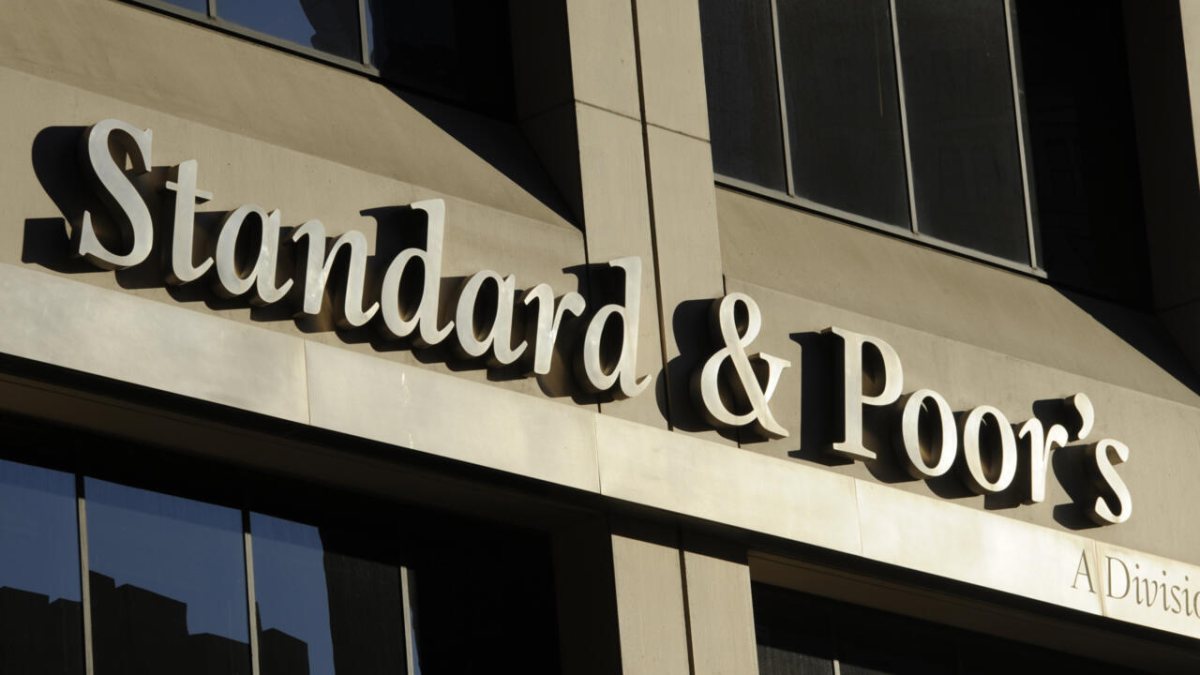
S&P cuts France's outlook to negative as debt rises and economy slips into recession
France's Édouard Philippe pledges retirement at 65 and spending cuts as poll ratings slide
Kenya among 15 countries in talks with new African credit rating agency
Spain's Pablo Hernandez de Cos picked to succeed Lagarde as head of the ECB
Woman Dies in Mwea House Fire as Residents Fault Delayed Response

Global Community Remarks
0