
Equity Bank backs Sh13bn Galana-Kulalu maize expansion as Selu reports yields of 35 bags an acre

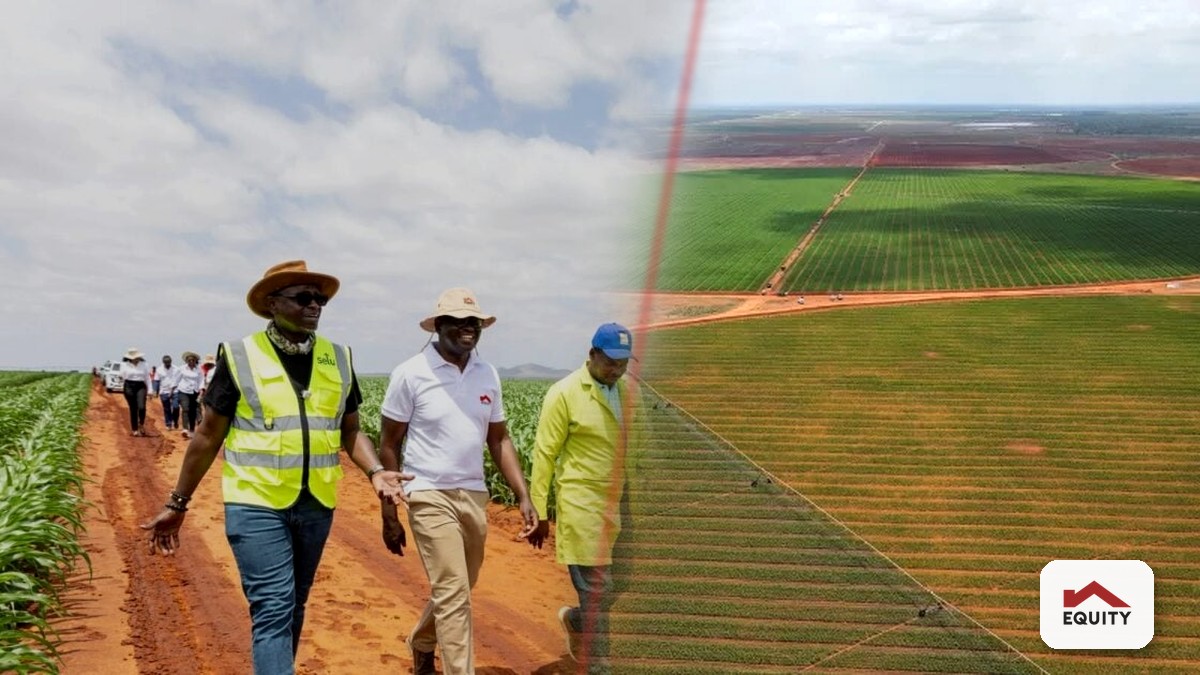
The private operator at the Galana-Kulalu irrigation scheme plans to spend Sh13 billion over the next three years to expand maize production, with Equity Bank providing phased financing. The firm reports yields far above what most Kenyan farmers harvest.
Selu Africa Limited holds a 20,000-acre parcel on the Kilifi-Tana River border. It has raised the area under crop from 500 acres in 2025 to 2,000 acres this year. The company says it has recorded yields of up to 35 bags of maize per acre, more than three times the national average, and is targeting more than nine tonnes per hectare as it scales up.
The yield figures come from the operator and have not been independently verified. The firm first announced plans to invest Sh13 billion at the scheme in early 2024.
Drones, sprinklers and data
Selu Group founder and chairman Peter Njonjo said the project combines irrigation, renewable energy and precision-farming technology. The farm uses agricultural drones and sprinkler systems and relies on detailed data collection to guide planting, input use and other decisions in real time.
The farm works with US machinery maker AGCO, Brazil's Campo and Bayer AG, while LEAF Africa supports its research.
Bank eyes food import bill
Equity Bank Kenya managing director Moses Nyabanda said the country's heavy spending on imported food was the opening the bank wants to finance.
"We continue to spend hundreds of billions of shillings annually importing food. That gap is our opportunity," he said.
Nyabanda said agriculture contributes about 23 per cent of gross domestic product but grew only about three per cent last year because of erratic rainfall. Under its Africa Recovery and Resilience Plan, Equity wants agriculture to make up 30 per cent of its loan book. The lender says it will finance the anchor investor and also the input dealers, transporters and traders who do business around such projects.
Jobs and the test ahead
The expansion is expected to create more jobs in farm operations, machinery, agronomy, transport and processing. Workers from nearby villages have learned irrigation, pest control and fertiliser application on the farm.
Galana-Kulalu, launched more than a decade ago as a flagship plan to grow a million acres of food, struggled for years with low output before the government turned to private operators to run sections of the land. The real test for Selu will be whether its high yields hold as it moves from a few thousand acres to commercial scale across the 20,000-acre block.
Photos: Capital FM; The Star (aerial view of Galana-Kulalu); Equity Group logo via Wikimedia Commons. Thumbnail design: HAMASTA MEDIA.



Know what people say about you.
Media monitoring, audience insights and strategic communication for your brand.


More in Business
See all
Why a litre of petrol costs Sh227: inside Kenya's fuel price squeeze

Kenya's Sh13.48 trillion debt: Where the money goes and what it costs you
Digital farm advice reaching 8.5 million smallholders at risk as donor money dries up, AgriFin forum warns
Muhoroni, Chemelil cane farmers reject Ichung'wah's Crops Bill, say new KADCO lender will bring back cartels
Kenya imports 60% of its potato products, Kagwe tells World Potato Congress as he courts processors
Tea Board stops collecting 0.8% export levy after Machakos court suspends new tea rules
Global Community Remarks
0