
Kenya's Sh13.48 trillion debt: Where the money goes and what it costs you

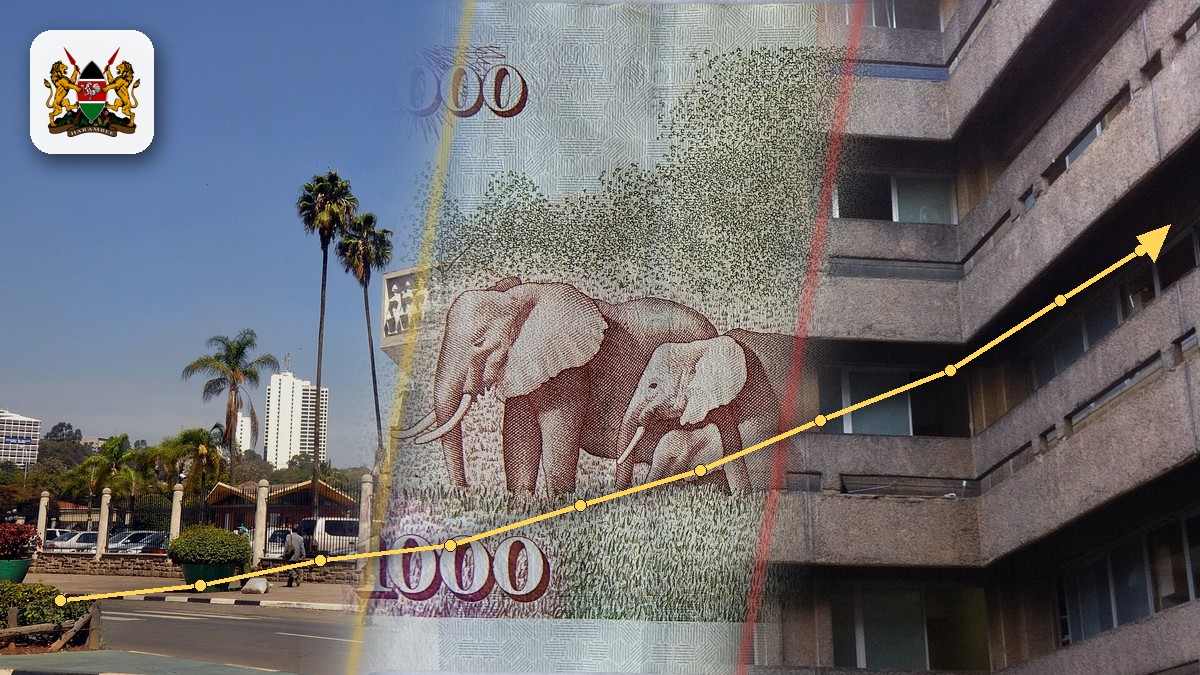
Kenya now owes about Sh13.48 trillion, and the cost of carrying that debt is growing faster than the economy that has to pay for it. Provisional figures in the Central Bank of Kenya's weekly bulletin of October 23 put total public debt at Sh13.475 trillion at the end of August 2026, up Sh246 billion in that month alone. The Standard, which first reported the figure, calculated that the stock has risen by Sh4.77 trillion, or 54.9 per cent, since September 2022, when it stood at Sh8.701 trillion and President William Ruto took office.
For a nurse in Kisumu or a jobseeker in Kakamega, the real question is how much of their tax goes to lenders, and what is left for everything else.
What you need to know
- Public debt reached a provisional Sh13.475 trillion at the end of August: Sh7.68 trillion owed at home and Sh5.80 trillion abroad, according to CBK data.
- The Treasury projects debt service of Sh2.30 trillion this financial year, about 80 cents of every shilling of ordinary revenue. Interest alone takes about 45 cents.
- Interest due this year (Sh1.295 trillion) is roughly three times the Sh428 billion that all 47 counties will share.
- The deficit is widening ahead of the August 2027 election, and the Treasury plans to borrow another Sh1.32 trillion in 2027/28.
Where the money comes from, and where it goes
Most new borrowing is local. CBK figures summarised by the Rio Times show domestic debt grew 12.3 per cent between December 2025 and August 2026, against 5.8 per cent for external debt. Treasury bonds account for Sh6.37 trillion of the domestic pile and short-term Treasury bills for Sh1.20 trillion. Commercial banks hold about a third of domestic government securities.
By October 16, domestic debt alone had reached Sh7.82 trillion, CBK data show.
Little of this money builds new roads or clinics. In the year to June 2026 the government borrowed Sh1.135 trillion at home to plug a Sh1.34 trillion deficit, Business Daily reported, while paying Sh862.7 billion in domestic interest over the same period. Much of the fresh borrowing flows straight back out as interest.
Official figures do not always agree. The Treasury's fourth-quarter budget review put debt at Sh13.01 trillion at the end of June, about 68.5 per cent of GDP, according to the Nairobi Law Monthly. The Treasury's Annual Public Debt Management Report, cited by Business Daily, gives Sh13.12 trillion and 70.4 per cent of GDP for the same date. Both are well above the 55 per cent of GDP anchor Parliament adopted in 2023 when it scrapped the old Sh10 trillion ceiling.
How much of every shilling goes to lenders
The answer depends on what is counted, which is why officials quote different numbers.
On the widest measure, which includes repaying the principal on maturing loans, the Treasury's debt report projects debt service of Sh2.301 trillion in 2026/27. Against projected ordinary revenue of Sh2.884 trillion, that is 79.8 per cent, up from 72.4 per cent last year, Business Daily reported. In 2021/22 the share was 47.9 per cent.
Much of the principal is refinanced with new loans, but interest is a true cost. It is projected at Sh1.295 trillion this year, or about 44.9 per cent of ordinary revenue. By our calculation, that is roughly Sh3.5 billion a day.
Controller of Budget Margaret Nyakang'o told the National Assembly's Public Petitions Committee in July that loan repayments consume 71 per cent of government revenue. "We cannot survive. The impact is that we will continue borrowing for us to survive," she said, according to Citizen Digital.
A third measure adds pensions. Business Daily reported in August that debt and pension payments together took 51.8 per cent of taxes in 2025/26, up from 18 per cent in 2013/14. The Treasury itself acknowledged that "nearly half of ordinary revenue was used" for these charges, squeezing development spending.
What it means for counties
Counties are getting a little more in shillings, but not much. The Division of Revenue Act that President Ruto signed on June 15 gives the 47 counties Sh428 billion for 2026/27, up Sh13 billion from Sh415 billion, The Standard reported. Governors had asked for Sh534.95 billion and the Commission on Revenue Allocation had recommended Sh458.9 billion, the Star reported in March.
Set beside the debt bill, the county share looks modest. Domestic interest alone is projected at Sh1.027 trillion this year, about two and a half times what all counties together will receive for health centres, early childhood education, feeder roads and salaries.
Revenue is also coming in below plan. The draft Budget Review and Outlook Paper cut this year's revenue forecast by Sh101.9 billion, Business Daily reported. Interest and loan repayments are first-charge payments from the Consolidated Fund, so when cash is short it is everything else, including transfers to counties, that tends to wait.
Hospitals and jobs feel the squeeze
The health budget did rise. The Standard reported that the 2026/27 estimates give the sector Sh175.5 billion, Sh37.5 billion more than a year earlier, as donor support falls. Yet immunisation management dropped to Sh6 billion from Sh15.6 billion, and communicable diseases to Sh4.75 billion from Sh8.5 billion. This year's interest bill is more than seven times the entire health allocation.
Health workers have spent much of the year fighting over money already promised. Nurses held a 43-day national strike from July 29 to September 9, ending it after governors offered an extra Sh13,000 in risk and uniform allowances, Kenyans.co.ke reported. Now the doctors' union, KMPDU, says only 20 counties had implemented agreed salary adjustments by the end of September, and its national council has directed it to issue a strike notice on November 1 if the remaining 27 do not comply, Citizen Digital reported.
Public jobs are scarce too. A Treasury circular dated August 2025 extended a hiring freeze, first imposed in 2021, for three more financial years, allowing only replacements for staff who retire, die or are dismissed, the Star reported. For young graduates, that means fewer openings at the country's biggest employer.
The 2027 election-year pressure
The general election is set for August 10, 2027, and the budget is moving the wrong way for a government that has promised to cut its deficit. The draft Budget Review and Outlook Paper raised planned spending for 2026/27 to Sh4.86 trillion and widened the deficit by Sh143 billion to Sh1.288 trillion, Business Daily reported, largely because of higher domestic interest. A promised PAYE cut has been paused, while VAT on fuel was halved to 8 per cent in April and the lower rate extended to October.
Rating agency S&P Global warned in August that the deficit could reach 7.1 per cent of GDP this year, against the Treasury's 5.5 per cent target, citing revenue shortfalls, rising interest and election-year spending, Kenyans.co.ke reported. For 2027/28, the Treasury plans to borrow Sh1.321 trillion, mostly at home, within a proposed budget of Sh5.323 trillion.
Kenya also has no IMF programme to anchor it. The previous $3.6 billion arrangement ended without its final review, and the IMF said in April that talks could not advance until Kenya responded to a governance and corruption diagnostic report. "We continue to have those discussions," CBK Governor Kamau Thugge said on August 12, according to Kenyans.co.ke.
The Treasury's own report says Kenya's debt "remains sustainable but at high risk of distress". It expects debt service to ease to 64.7 per cent of revenue by 2029/30 as collections improve. That depends on revenue actually rising at a time when politicians will be under pressure to cut taxes, raise pay and launch projects.
What to watch
- Whether CBK's provisional August figure of Sh13.475 trillion is revised, and how fast domestic debt grows beyond the Sh7.82 trillion recorded in mid-October.
- November 1: whether KMPDU issues its strike notice to the 27 counties yet to pay agreed salary adjustments.
- The final Budget Review and Outlook Paper and 2027/28 spending ceilings, including any PAYE relief and its cost.
- Whether counties receive their monthly Exchequer releases on time as revenue falls short.
- Progress on a new IMF programme, which the CBK has said it wants to be a funded arrangement that provides direct financing.
Photos: Jorge Láscar/Wikimedia Commons (CC BY-SA 2.0); Ahandrich/Wikimedia Commons (CC0); Rotsee/Wikimedia Commons (CC BY-SA 4.0); Coat of arms of Kenya/Wikimedia Commons; Thumbnail design: HAMASTA MEDIA.


Take your event live to thousands.
Multi-camera live streams, panel discussions and digital broadcasts with professional crews.




More in Business
See all
Why a litre of petrol costs Sh227: inside Kenya's fuel price squeeze
Equity Bank backs Sh13bn Galana-Kulalu maize expansion as Selu reports yields of 35 bags an acre
Digital farm advice reaching 8.5 million smallholders at risk as donor money dries up, AgriFin forum warns
Muhoroni, Chemelil cane farmers reject Ichung'wah's Crops Bill, say new KADCO lender will bring back cartels
Kenya imports 60% of its potato products, Kagwe tells World Potato Congress as he courts processors
Tea Board stops collecting 0.8% export levy after Machakos court suspends new tea rules
Global Community Remarks
0