
India's food inflation hits 8.94% as price rises spread beyond vegetables
Food prices in India are climbing much faster than overall inflation, and economists warn that the increases are no longer confined to a handful of items, according to BBC Business.
Government figures show that retail inflation rose to 6.09% in October, up from 5.54% in September. Food inflation was far higher at 8.94%.
Rural areas bore more of the strain. Food inflation there reached 9.09%, against 8.68% in towns and cities.
Weather and costs push prices up
Economists blame a mix of weather disruption, supply shortages and higher input costs. Nearly 60% of India's farmland relies on rainfall, which leaves the country highly exposed to changes in the monsoon.
This year the southwest monsoon delivered 13% less rain than normal and fell unevenly across the country. Strengthening El Niño conditions have added to the risks facing farm output.
Energy costs also feed through to food. They affect transport, irrigation and farm inputs such as fertiliser. India also relies heavily on imported edible oil, so global markets have a direct effect on prices at home.
The cost of a meal
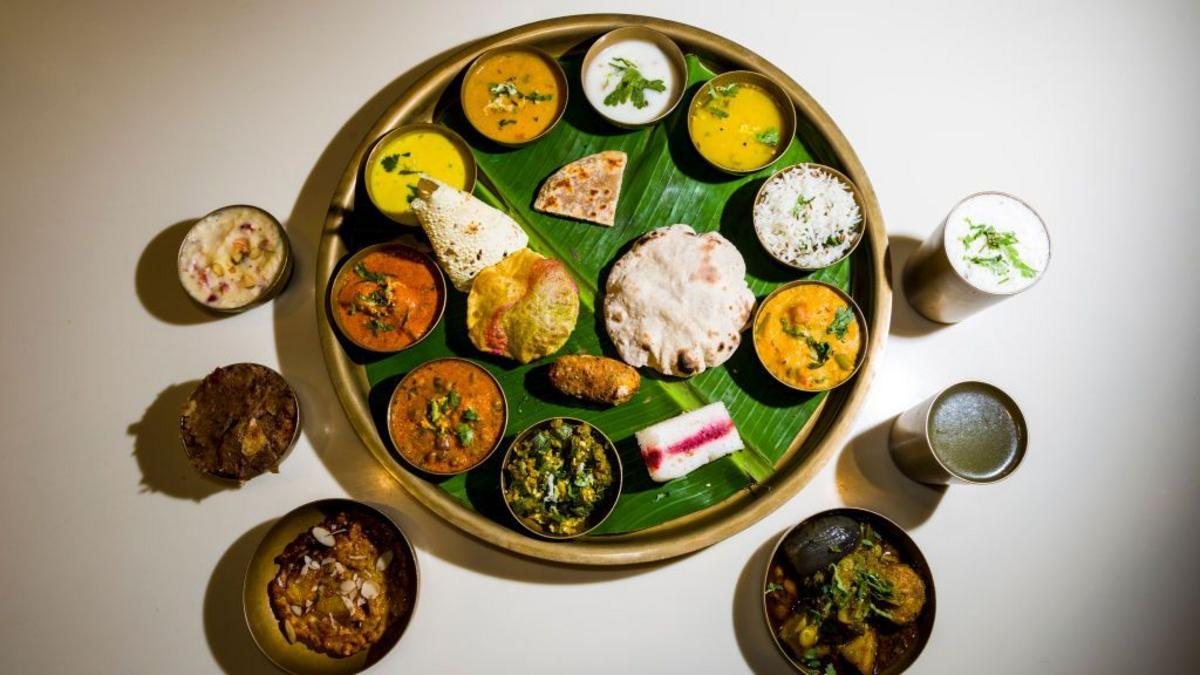
Analytics firm Crisil calculated that a home-cooked vegetarian thali, a traditional meal platter, cost 12% more in October than a year earlier. Onions, tomatoes, other vegetables, edible oil, rice and cooking gas all became more expensive. A non-vegetarian thali rose by 9%.
Pushan Sharma, Crisil's director of intelligence, said rice was up about 10% year-on-year. Pulses rose 8%, edible oil 13% and LPG 10%.
"It's no longer a few commodities that are driving this increase, it's becoming a little more broad-based," Sharma told BBC Business.
Households can buy fewer onions when prices jump. Staples such as rice, pulses and cooking oil are much harder to replace.
Sharma said perishable produce tends to cause sudden price spikes. Staples such as rice and wheat rise more slowly but can stay expensive for longer.
Poorest households hit hardest
Food and beverages now make up 36.75% of the basket used to measure India's consumer prices, down from 45.86% in the previous series. The change reflects higher spending on services, transport, healthcare and education.
Even so, food remains the biggest driver of inflation. Rajeswari Sengupta, an associate professor of economics at the Indira Gandhi Institute of Development Research in Mumbai, said a large share of household income still goes on food. That leaves poor families little room to adjust.
Crisil chief economist Dharmakirti Joshi calculated that the poorest 20% of rural households faced inflation of 6.9% in October. The richest 20% faced 6.5%.
Economists also warn that food price shocks can spread through the wider economy, according to BBC Business. Workers may push for higher wages, and businesses may then raise their own prices. This is the kind of wage-price spiral that central banks try to prevent.
Storage gaps and policy balancing
Economists say India lacks enough facilities to sort, grade, store and process perishable produce. As a result, a tomato glut can leave farmers unable to sell at a profit, while consumers pay sharply higher prices a few months later.
Onions follow a seasonal pattern. The rabi crop accounts for about two-thirds of production. It is harvested in March and April and then stored, and prices can rise steeply as those stocks run down. Sharma said better processing, such as turning surplus tomatoes into puree, could help even out the swings.
India does have some protection against rising prices. Government cereal stocks are comfortably above required minimum levels, and rice stocks are especially large. A free-food programme also covers nearly 800 million people.
Policymakers face a difficult balance. Minimum support prices protect farmers in a low-productivity sector. At the same time, sharp rises in staples such as onions and tomatoes can quickly anger consumers. Governments have responded in the past with export curbs and limits on how much traders can stockpile.
The squeeze comes as Indian diets change. Consumption surveys from 2011-12 and 2023-24 show cereals taking a smaller share of food spending. Households across all income groups are eating more dairy, fruit and meat, with the biggest gains among the poorest.
This story was prepared by the Hamasta Newsdesk with AI assistance, based on reporting by BBC Business. Read the original report. Photo: BBC Business.

Tell your story on screen.
Commercials, documentaries, interviews and social video, from script to final cut.





More in Business
See all
Inflation jumps to 7.3pc, highest in over three years, as fuel, fares and food push up cost of living

Oil above US$100: what rising crude prices mean for Kenya's pump prices

Angola cuts key interest rate to 14%, lowest in over a decade, as inflation eases
Mauritius drought slashes farm output as El Niño heat drives up food prices
Inflation climbs to 7.3% in October, highest in over three years, as transport costs jump 17%

Global Community Remarks
0