
Satellite study finds Lagos and Alexandria sinking faster than UN climate body estimated
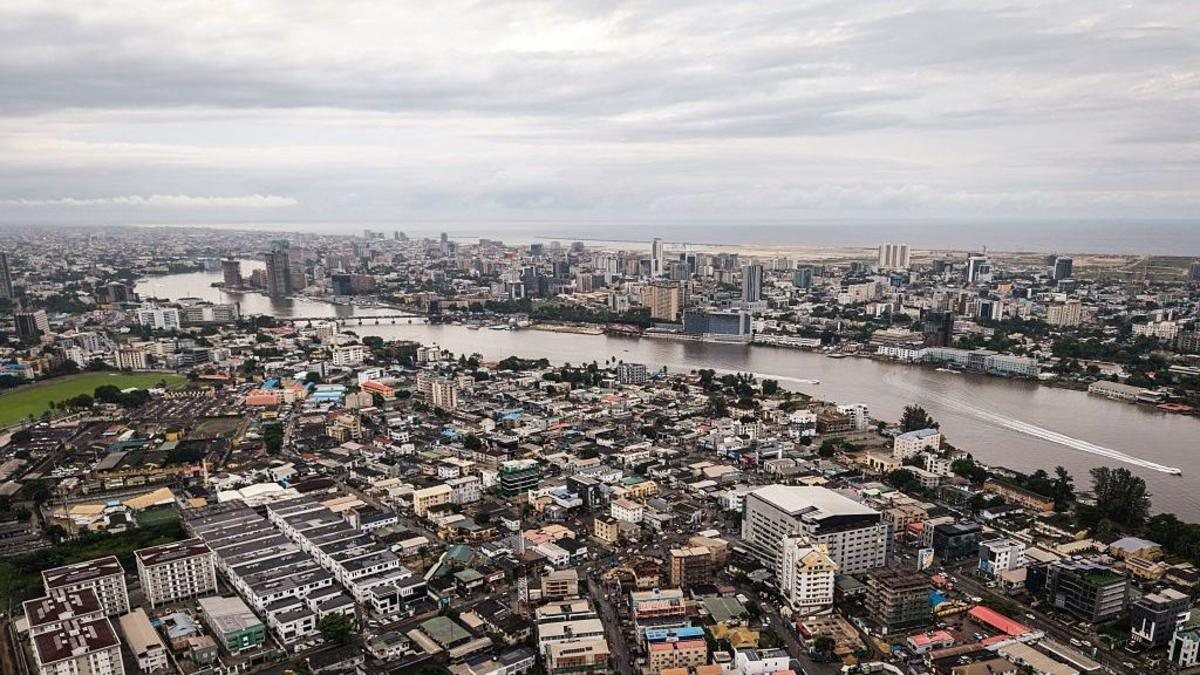
Several of Africa's biggest coastal cities, among them Lagos in Nigeria and Alexandria in Egypt, are sinking faster than earlier estimates suggested, according to new research reported by BBC News Africa.
Researchers from Virginia Tech in the United States analysed radar images from the European Space Agency's Sentinel-1 satellites to measure how far the ground beneath 20 African coastal cities had shifted. They found that in some places the land was dropping well beyond the rates estimated in 2021 by the Intergovernmental Panel on Climate Change (IPCC), the UN's climate science body.
The study, published in the journal Science Advances, estimates that seven million people and $180bn (£137bn) worth of assets could face flood risk by 2050. It also says four million people in Lagos alone may be exposed to extreme sea levels by the end of the century.
Average sinking rates measured
The ground under Alexandria was found to be sinking by an average of 6mm a year, while Lagos was dropping by about 5mm a year. Luanda, the Angolan capital, has also sunk significantly.
If Alexandria's rate continues, the researchers say, sea levels around the city would rise 36% more by 2050 than the IPCC projected under its middle scenario for growth in planet-warming emissions.
Not every city is affected in the same way. Durban in South Africa has stayed stable or even risen slightly, the study found.
When land sinks, it falls lower relative to the ocean, compounding the sea-level rise caused by climate change. Lead author Oluwaseyi Dasho said the effects of subsidence are often unnoticed day to day but can substantially increase flood exposure over decades.
How the satellites measured it
Dasho said a shortage of monitoring stations had previously made it difficult to obtain current, local data on subsidence across Africa. Satellite readings allowed the team to detect ground movements as small as 1mm a year.
Senior author Manoochehr Shirzaei, a geosciences professor, explained that the Sentinel-1 satellites pass over the same area every six to 12 days, sending radar signals that bounce off the ground and back. Changes over repeated passes in the time taken for the signal to return show how much the land has moved.
Human activity a major driver
While some subsidence is natural, much of it is caused by people. A key factor is the rising water demand of fast-growing cities: pumping too much groundwater can compact soil and cause the surface to sink.
In Alexandria, the study suggests the Aswan Dam on the Nile may be trapping sediment upstream that would otherwise replenish the sinking land. In Lagos, reclaiming land from the ocean to build artificial islands and constructing buildings on loose ground are cited as possible contributors.
Shirzaei told BBC News Africa that the human causes are usually highly local, which means they can be tackled through local policies. Options include providing alternative water sources and growing crops that need less water. Where sinking cannot be reduced, he said, cities could adapt by building flood defences or moving key infrastructure to higher ground.
"Whatever we cannot mitigate, we try to adapt to it," Shirzaei said.
Better planning for developing countries
Shirzaei said identifying where the IPCC had underestimated, and also overestimated, the danger could help planners direct resources more effectively. He argued that developing countries had been left out of much sea-level rise planning because of poor monitoring, and suggested the same techniques could help fill knowledge gaps elsewhere, such as in the Pacific islands.
Dasho said he hoped the findings would help African governments prepare adequately for future challenges and for future generations.
This story was prepared by the Hamasta Newsdesk with AI assistance, based on reporting by BBC News Africa. Read the original report. Photo: BBC News Africa.


Take your event live to thousands.
Multi-camera live streams, panel discussions and digital broadcasts with professional crews.




More in Environment
See all
Global surface water suffers record drop as France battles drought, study finds
Climate activists march in Nairobi, push government to boost clean energy funding

Kenya named in climate science row slowing talks at COP31 in Antalya
Vanuatu urges overhaul of UN climate talks, warns COP31 could backslide

NATO pledges to defend space as Russia nuclear satellite reports emerge
Global Community Remarks
0