
India plans 50% rise in Lok Sabha seats as opposition cries 'gerrymandering'
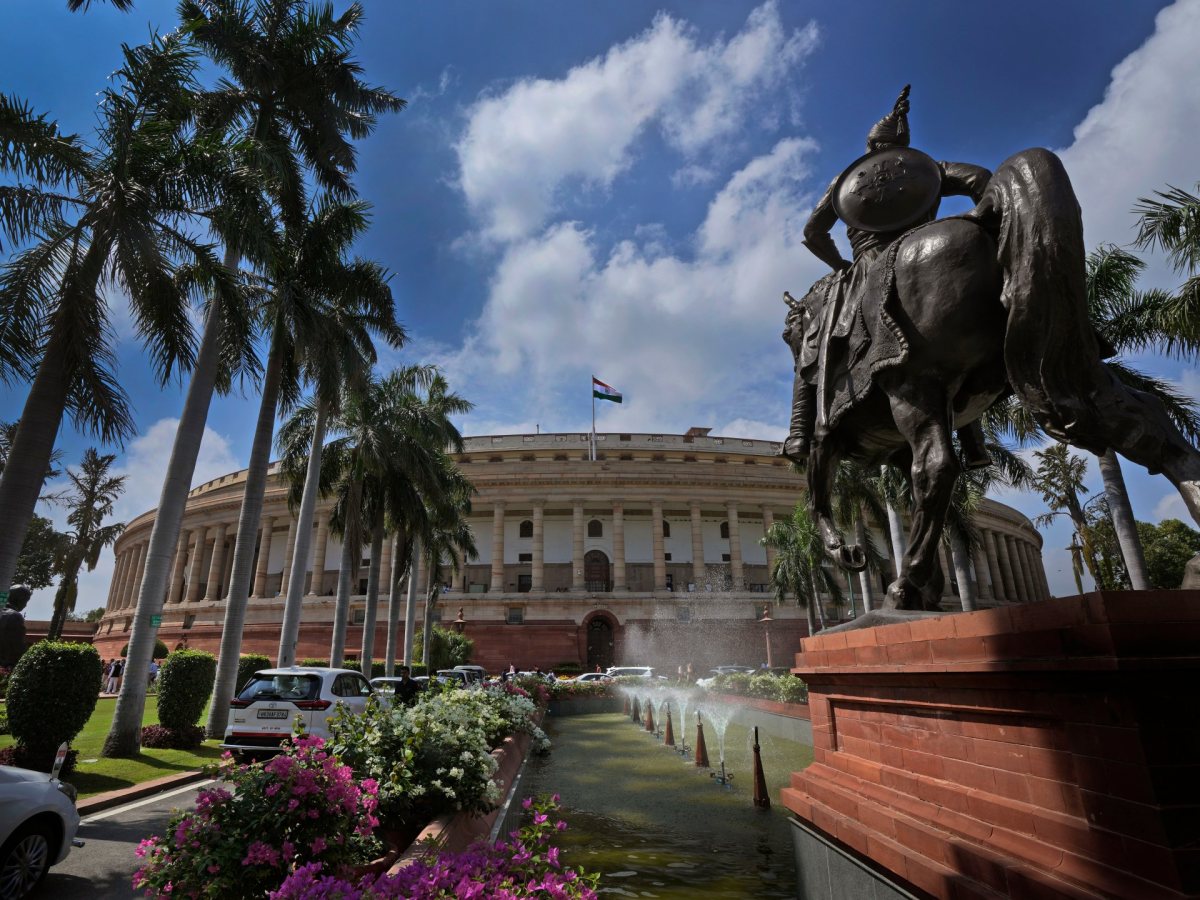
India's government has approved plans to expand the lower house of Parliament, the Lok Sabha, by half, from 543 seats to about 850, in a move opposition leaders say could hand the ruling party a lasting electoral advantage, according to Al Jazeera.
Prime Minister Narendra Modi's cabinet cleared the Constitution (132nd Amendment) Bill, 2026, at a meeting on November 27. Alongside it, ministers approved the Delimitation (Second) Bill, 2026, which would allow constituency boundaries for Parliament and state assemblies to be redrawn nationwide. Both bills are to be tabled at a special sitting of Parliament on November 30.
What the bills propose
The Lok Sabha currently has 543 seats against a constitutional ceiling of 550. Under the proposal, the maximum would rise to 850, with 815 seats allocated to states and 35 to union territories. The amendment also provides for a freeze on seat numbers until 2051.
A Delimitation Commission would redraw boundaries using data from the 2011 Census and set aside one-third of seats for women. The government says the exercise will put into effect a 2023 law reserving 33 percent of seats in Parliament and state legislatures for women. Women currently make up 14 percent of Lok Sabha members.
The government tried to advance women's reservation in April this year but failed to secure the two-thirds majority needed for the Constitution (131st Amendment) Bill, 2026. Opponents argued at the time that the quota should not be tied to delimitation.
The ruling Bharatiya Janata Party (BJP) praised the framework in a post on X, describing it as a commitment to inclusive democracy and to women's role in nation-building.
Opposition alarm
Critics, including opposition parties, student groups and the youth-led Cockroach Janta Party, have rejected the plan. Rahul Gandhi, leader of the opposition in the Lok Sabha, said on X that an 850-seat house "will finish democracy in India", arguing it would let the BJP and its ideological parent, the Rashtriya Swayamsevak Sangh, reshape the electoral map in their favour.
Congress Party President Mallikarjun Kharge questioned the impartiality of Chief Election Commissioner Gyanesh Kumar, who will head the Delimitation Commission. The Election Commission has faced scrutiny after removing more than 130 million names from the electoral roll. Kharge also asked why the government was relying on 2011 figures when a new census is due early next year, noting that seats reserved for Scheduled Castes and Scheduled Tribes are meant to reflect their share of the population.
The Cockroach Janta Party said it backed women's reservation but accused the government of using it as cover for partisan boundary changes. Supreme Court senior advocate Karuna Nundy called the women's quota a "Trojan horse" for delimitation.
North-south divide
Southern states protested when similar bills were introduced in April, fearing that population-based allocation would give the more populous north outsized influence. Al Jazeera reports that some parties, including Tamil Nadu's Dravida Munnetra Kazhagam, have since shifted position. Analysts also warn that a larger Lok Sabha could dilute the weight of the upper house, the Rajya Sabha, whose membership is fixed at 250.
Development economist Santosh Mehrotra told Al Jazeera that meaningful debate would be impossible with 850 MPs, and argued the 50 percent increase was designed so that sitting male MPs would not lose their seats to the women's quota.
Political analyst Rasheed Kidwai told Al Jazeera that passing the bill would be a major victory for a BJP facing pressure over youth unemployment, education and living costs. He warned, however, that a bigger house could strengthen executive dominance while weakening lawmaking.
India has redrawn its constituencies four times since independence in 1947, most recently in 2002.
This story was prepared by the Hamasta Newsdesk with AI assistance, based on reporting by Al Jazeera. Read the original report. Photo: Al Jazeera.



Grow an audience that listens.
Social media management, digital campaigns and online storytelling that converts.



More in International
See all
India's Congress party takes on Meta over alleged censorship of political posts
Nepal's Balendra Shah heads to Delhi seeking reset with India
Nepal's rapper-turned-PM Balendra Shah secures $1.63bn flood aid on India visit
India and Denmark adopt 2027–31 action plan, upgrade green partnership
India Plans Quarantine of Up to Six Days for Kenyans Lacking Yellow Fever Proof
Global Community Remarks
0